Showing posts with label BEL PAESE. Show all posts

Thursday, 12 October 2017

Italy a real problem as no-vax war set in EU agenda

«Unacceptable» for the European Commission chief that in 2017 children still die for measles. Figures suggest is time for remedies, called vaccinations

A US measles information leaflet. Click to enlarge
by Emanuele Bonini

A spectre is haunting Europe, the spectre of sickness. All the powers of Europe have entered into a holy alliance to exorcise this spectre, except the Italians. It could be argued that Karl Marx, philosophy and history are all serious things. Perhaps health is not? Of course it is, otherwise the Italian no-vax culture would had never become a matter of urgence. How to explain the lack of vaccinations in Italy in the politica agenda of the EU? In no other way but that. Care and healthcare are supposed to be prerogative of sovereign countries, but apparently in certain cases they don't care. So here comes the need of intervention. The president of the European Commission stressed it clearly in his State of the Union speech, and that was astonishing as is the Italian state of play. The latest figures from the European Centre for Disease Prevention and Control (ECDC) help a lot in catching the spectre which is annoying the continent. Only in 2017, as of 13 September, Italy has reported 4.487 measles cases, making the country the 5th in the world for highest infection rate. Worse than Italy made India, Nigeria, Pakistan and PRC, all developing or underdeveloped countries.

Shame and shake. Antivaxers are ashaming Italy and shaking Europe. «Measles outbreaks continue to occur in a number of EU/EEA countries», the ECDC noticed. Italy and Romania are the main EU countries where such infections take place, as also detected by the World Health Organization (not updated data compared to those from the ECDC). Thus, «there is a risk of spread and sustained transmission in areas with susceptible populations». According to Jean-Claude Juncker «it is unacceptable that in 2017 there are still children dying of diseases that should long have been eradicated in Europe». In other words, what the president of the European Commission ment without saying, a modern Europe can't afford to have neither medievalist forces nor third world poverty dynamics. «Children in Romania or Italy must have the same access to measles vaccines as children in other European countries. No ifs, no buts». So antivaxers, please go home! «Avoidable deaths must not occur in Europe, and we are working with all Member States to support national vaccination efforts». So work Italy? Just in case, the ECDC recalled that «vaccination with at least two doses remains the most effective measure» against measles outbreaks. Oops!


Related articles: 
EU commissioner declared war on antivaxers

Tuesday, 28 March 2017

No CV, in Italy job is got by playing futsal

Italian minister of Labour explained how it works in his country. Nothing new

Giuliano Poletti
by Emanuele Bonini

In order to get a job «is better to play five-a-side football than send a CV». For this sentence the Italian minister of Labour and Social Policies, Giuliano Poletti, was asked to step down amid harsh critics. No matter if it was a gaffe or a misunderstanding, the point is Poletti didn't nothing but say what Italy is about. There was no intention of offending anybody, since everybody's dignity has been already offended by the clientelism typical of Italy. The country is about that: personal connections. Poletti tried to express better the concept of the 5-a-side football, and the result was exactly that. «I did not belittle the value of the CV, but I stressed the importance of a relationship of trust that can develop outside the school context». This something completely true: connection is on the basis of meritocracy in Italy. Tell me who you know, and I'll tell what you'll become.

It is not the first time a minister of the Italian republic explains what is the country in reality. In 2001 the minister of Infrastructures of that time, Pietro Lunardi, said the country «has to live with mafia». Was the minister wrong? No, he wasn't. Unless the State wants to enter into a civil war, the only way to deal with organised-crime is the promotion of a cultural policy which of course takes time to give results. Meanwhile mafia is there and the everybody has to live with. So, there was nothing wrong in Lunardi's words. Exept for the fact he was a minister and given the role he had at that time he wasn't allowed to think and speak that way. Now it's Poletti's turn. He didn't do anything wrong. He just unveiled what Italy is about. Unfortunately he didn't mention he's supposed to be there to change the country.

Friday, 20 January 2017

«Corruption in Italy a question of culture»

Italians have no the habit of honesty, according to the Council of Europe. A long term approach is needed more than laws

by Emanuele Bonini

Honesty is an optional in Italy. In the country the principle of legality is missing, but it's principles themselves which are not there. Instead of the rule of law, in Italy there is the rule of non-law. And this is because ethics don't belong to the Italian nature, according to the Group of States against Corruption (GRECO) of the Council of Europe. The latest evaluation report on corruption prevention in Italy put on paper a national problem which is not just or simply legal, but above all cultural. Italians have the culture of bribery. In such a context, bills or legislative acts will never be enough. «Combating corruption has to become a matter of culture and not only rules», underlined the report. «This requires a long term approach, continuing education throughout all sectors of society as an indispensable component of the anti-corruption strategy and sustained political commitment».

Italians need to be educated to be honest and fair, that's the real challenge. Can Italy succeed? Sentence waits posterity. Of course, premises are not really encouraging since those who are supposed to act don't seem to be in the position to do it. It's up to the decision makers to promote the change, to push for a new way of thinking. It's duty of politicians to give the country that long term approach required to stop corruptions once and for all, but they are the first people to be considered part of the problem. Italy has no schemes in place for MEPs, and GRECO asked that «clear and enforceable conflict of interest rules be adopted for parliamentarians, including through a systematisation of the currently dispersed ineligibility and incompatibility regime». Furthermore, the formal recommendation for «a robust set of restrictions concerning donations, gifts, hospitality, favours and other benefits for parliamentarians» means that Italian MEPs are exposed to the risk of being bribed.  A code of conduct should be issued and applied to both branches of the Italian Parliament. Since there is a cultural problem, according to GRECO this measure could facilitate the change. «Although a code in itself does not guarantee ethical behaviour it does help to foster a climate of integrity and to endorse the intention of the current legislature to abide by a culture of ethics». The problem of Italy is not that the country is corrupted. The problem of Italy is that Italians have no the habit of legality.

Friday, 23 December 2016

Italian Minister wants young away from the country

Giuliano Poletti is in charge for Social Policies, but he prefers not to work on social issues

Giuliano Poletti
Opinions

«I know people who went away and it is fine they stay where they are, because surely this country will not suffer from not having them around anymore». The Italian Minister of Labour and Social Policies, Giuliano Poletti, sparked critics and complaints for his statements on young people leaving Italy in search of jobs and better living conditions. He could clarify better, by saying That indeed between dealing with skillful people and bad guys, the second option is preferable and even better for the good of the national system. If this concept can be desumed by the minister's statement and perhaps even agree with him in line of principle - albeit in the controversial formulation of such a concept - it is unacceptable to listen to a member of a government speak in such a way. It's up to the government promoting policies for social inclusion. It means that when certain nationals are the kind of people they can be defined as "bad guys", it is duty of national authorities to invest on them in order to convert these people in "good guys". The blame game is an easy task, especially when it comes to escape personal responsibilities. In this case, Poletti "forgot" that he is in charge for Social Policies, so it's up to him to search and rescue the lost sheep, to tell the story in religious terms.

Not later than three weeks before of Poletti's statement, the Italian government had in place a large-scale campaign to bring all the Italians living abroad to vote at the referendum on the Constitutional reform proposal. Poletti's misstep sent a counterproductive message from the Italian government. Italians abroad only count in time of elections, after vote they come back to the general indifference or, even worst, to the general disdain of politicians. This something harmful both for the public opinion and for politics. Italians living abroad, all those who left the country in search of what their own country wasn't able to provide, will be no surprised in listening they are not welcome. In somehow, they got nothing but a confirmation of what they already knew. What is really unacceptable is a minister who prefer to blaim a part of society instead of working on it, and a government which prefer to defend such a minister instead of asking for his resignation. But that's Italy, after all.

Monday, 7 November 2016

«Brain drain harms Italy's competitiveness»

The European Commission's warning in the 2016 report on Education

by Emanuele Bonini

Italy should care of national high-skill workers, since the migration of professionally valid people risks to harshly hit the country in terms of loss of competitiveness, the European Commission warned today. In its 2016 edition of the Education and Training Monitor report, the EU body stressed that in Italy «transition from education to work is difficult, even for highly qualified people» and «this is causing a "brain drain"». National authorities have not to underestimate the impact of such a phenomenon, but it appears the country is not putting in place neither measures nor wider policies to address the matter. In other terms the Italian education system is a good one, but completely incapable of keeping those who are ready for the labour market.

Problem with no solutions
The number of Italian citizens with a tertiary education degree leaving the country has been rapidly increasing since 2010. «This has not been compensated by inflows of equally well qualified Italians returning to the country». This means governments couldn't react, and not only that. There is not only a lack of political action. As the European Commission observed, the increasing emigration reflects better job opportunities and conditions abroad. As underlined in the report, survey data show that compared with their peers working in Italy, young Italian graduates working abroad earn higher and more rapidly increasing salaries, work more frequently under open-ended contracts and consider their formal qualification more appropriate for their job. Furthermore, Italians with a doctoral degree working abroad report having both better job opportunities and significantly higher earnings. «This may explain why highly qualified Italian workers have very little inclination to return to their home country. The emigration of highly qualified Italian workers therefore does not qualify as "brain circulation"» (i.e. when people temporarily go abroad to study or work, but then go back to their home country).

Friday, 30 September 2016

Low wages an opportunity, said Renzi's government

«Invest in Italy» official brochure calls investors to the country, insisting in the chance of having less costs for employees' contracts

by Emanuele Bonini

Can the low level of wage be a reason to feel satisfied? Yes, if you are the chief of the Italian government. Instead of inverting trends giving citizens more economic power, in Italy low salaries are something to be proud of. Something to promote, according to the prime minister Matteo Renzi, whose secretary for Economic development issued an official brochure where the general poverty is described as an attractive business model for investors. «Italy offers a competitive wage level (that grows less than in the rest of EU) and a highly skilled workforce» points out the official brochure. In absolute figures, an engineer in Italy earns an average annual salary of 38,500€, while in other European countries the same profile earns on average over 48,500€ per year. Something to don't miss, according to the Italian authorities, whose aim is to attract investors in the hope of generating new jobs.

The national administration led by Matteo Renzi is at work in order to «make Italy a much better place to do business», stressed the Secretary of State for the Economic development, Ivan Scalfarotto. The Italian Trade Promotion Agency (ITA) offices in Italy and abroad «are able to provide support to investors throughout the project life cycle: from obtaining all relevant authorizations, to identifying any suitable incentive package». According to the Italian authorities a low index in salaries is good incentive to make business in the country.
a series of charts and tables shows the least cost of the Italian national workers compared to other countries of Europe. In case of problem in reading the chats, the official brochure explains that «Italy’s labour costs are well below other peer economies, like Germany and France». In addiction, it is well specified that labour cost growth rates registered in Italy between 2012 and 2014) «are lower than those recorded by Eurozone countries (+1.2% vs. +1.7%)».

Thursday, 8 September 2016

Charlie Hebdo and the earthquake: if it doesn't make you angry, it is not satire

About the controversy over the new illustration, the meaning, the truth, satire, and political correctness that, once again, are asphyxiating us

by Gianmaria Tammaro, for wired.it.
(This is the English version of the article published the 2nd of September, 2016. Click here to read the original post. English translation by Emanuele Bonini).

There are no half measures when it comes to satire. I realized that after having had discussions with Milo Manara, after having read Luz's book, after having heard about it from illustrators and cartoonists. Satire is uncompromising. That's the point. If it doesn't make indignant, if it doesn't hit, it is not satire. And then it doesn't even make sense to talk about it.

What Charlie Hebdo published in its latest copy is satire. It is, although it talks about the earthquake victims in Italy. Isn't it funny? Well, satire does not necessarily make people laugh: that's comedy. Satire is another stuff. And the problem is that in Italy it is not clear what satire, as in other parts of the world (even if, in some cases, because of real lack of freedom, not only nominal).

More than a year ago, we were ready to fill our mouths with the «je suis Charlie» slogan, and now, today, we are ready to disown it and saying that we were wrong; to say that maybe, perhaps, Charlie Hebdo men are not exactly saints.

It's like the principle by which «satire is fine as long as it is addressed to the others; but when it is addressed to me, to my friends, to my little backyard, then it is unacceptable».

The many interpretations this cartoon offers - three figures, three sentences, we talk about food, about Italy and misfortunes - become of secondary importance, finishing submerged by avalanches of do-goodism and politically correct (the same aspects criticized by Clint Eastwood, and it should be recalled).

Editorials are uncountable as well as are tweets. Indignation rises from civil society and politics. We all go on stage to explain - to pretend of explaining - what satire is. But we do not know. We look at the finger and not at the moon; we look at a cartoon and we don't know what to think. On the contrary, we refuse to think. And this is another problem, another fundamental point.

Thursday, 30 June 2016

Italy in troubles with banks because of... Italy

Governments didn't act when they could, and current rules where agreed  by Italian administrations. Short summary of a useless European debate

by Emanuele Bonini

Italy and the banking sector, a long never-ending story started many and many years ago. It is difficult to establish when exactly everything had origin and started, but it can be said (and it must be) that when there was the possibility to act, Italy didn't. What are talking about? Italy has a problem with non-performing loans, which means Italian banks have debtors not able to repay the loans or in conditions close to impossibility of repaying. In other words, the Italian banking sector has been experiencing an exposure to a liquidity crisis. 
This is something not new, and the European Commission in its latest Country Specific Recommendations (CSR) pointed out that «the stock of non-performing loans remains at a very high level» in Italy, asking the Italian authorities to «accelerate the reduction in the stock of non-performing loans». Currently this amount is approximately 200 billion Euro or 12% of Italy’s GDP. Already in the 2015 CSR the EU Commission warned that «since the end of 2008, the non-performing loan ratio of the Italian banking sector has sharply increased, mainly in relation to banks’ corporate exposure», asking Italy to «accelerate the broad-based reduction of non-performing loans». This shows the debate over banks in Italy is not a new one.

Having said that, let enter more into detail regarding the Merkel-Renzi confrontation. During the first ever European Council meeting without a British leader, the German chancellor was asked about the banking sector of Italy, where the Italian prime minister Matteo Renzi is reasoning on the possibility to freeze the European rules on «bail-in». Current rules don't allow public direct interventions, which means governments can't pump liquidity in the banking sector. Merkel clearly said that «we cannot renegotiate every two years the rules of the banking sector». What does this declaration mean? In 2014 new rules on banks where agreed under the so called BRRD directive, the European directive on bank recovery and resolution. According to these rules, approved by all the EU Member States, the «bail-out» era is over. What does «bail-out» mean? It means that in case banks are in difficulty or crisis, government can intervene by recapitalizing the bank with public money. New rules introduce, on the contrary, the idea of a «bail-in», which basically means that in case of banking turmoil it's up to private (bondholders, and depositors) repay the liabilities of the bank in order to recapitalize the affected institution.

Thursday, 2 June 2016

Gianni Agnelli's lawyer against Italy Constitution change

Franzo Grande Stevens critic over the way of proposing such a review. «Common rules of everybody life are decided together». Renzi? «An aspiring dictator»

Franzo Grande Stevens (centre)
by Emanuele Bonini

Certain statements by certain people make things not generic. In the case of Italy, please take note Mr. Franzo Grande Stevens decided to express his personal opinion on the constitutional reform proposed by the current government. Before going on, it is better to recall who Franzo Grande Stevens is and, as consequence, who he was. He is an Italian lawyer, famous for being the lawyer of the Agnelli family. He has been a personal consultant of Gianni Agnelli, the president of FIAT. He is not a person like all the others, for sure. It appears clear Franzo Grande Stevens contributed to write an important part of the country, and his opinion can't remain unheard. «I will vote for "no", I fight against this aspiring dictator», he said in an interview to Fatto Quotidiano, referring to the Italian prime minister Matteo Renzi and his idea of reforming the constitution. The proposal itself poses all the risks such a proposal can pose, but according to mr. Grande Stevens «the worst thing is a prime minister who threatens the electorate». Matteo Renzi is giving the referendum a test nature for the government he leads. He basically said "in case voters won't opt for 'yes', there will be a government crisis. «Who says something like that does not really have the sense of democracy», argued Gianni Agnelli's former lawyer. To him «the Constitution, the basic rules of coexistence that hold together the national community, are done decided all together». When the endorsement of democratic rules comes from an environment considered as "aristocratic", maybe there is something not working. In the supposed government of citizens, maybe?

Thursday, 12 May 2016

What April 25 is for Italians?

It should be a symbolic day for the Country, and in fact it is. The symbol of national ignorance

"Before April 25 dictatorship was there"
by Emanuele Bonini

It could seem a joke, but it is not. Italians don't know they had a liberation day. Maybe they simply don't remember, but what is worst between ignorance and amnesia? In every case there no is self-consciousness, and that's something not good. Having no memories means deny the and history. If there is nothing to be remembered, then nothing happened. In the occasion of the celebration of the latest Liberation Day, some journalists went up and down Italy to ask new generations which anniversary marks the 25th of April. The outcome was embarrassing. Of course we can imagine a lot of answers were cut in order to give the idea of general environment. There are still those know what Nazi-fascism was, but the reportage has shown a lot of people admitting to don't know the answer. It sounded weird listening to a young man saying «there's nothing to celebrate since I didn't want to be freed», because at that time he wasn't born yet. Despite the political ideas, Italians are a people with no memory and a people with no memory is a people doomed to have no future. Who was Adolph Hitler? What was Nazism? What was the WWII the result of? Ignoring what the 25th of April means, means no lesson was learnt. Without that, can a people be considered as really free? Apparently the Liberation day was there for Italy, not for the Italians.


Related articles:

Italy is a non-country

Friday, 15 April 2016

Italy, what does the new Constitution mean?

Reforms have been approved and in October a referendum will decide the destiny of these choices as well as the future of the Country, where oppositions have no reason to be

by Emanuele Bonini

According to the Italian minister for Constitutional Reforms, Maria Elena Boschi, finally Italy got a new Constitution «in line with modern times», after an approval of new State organization which marked «an historical day». Nothing to say about: that's all true. Italy radically changed its Constitutional chart, adopted for the first time in 1948 after nearly three years of work. Therefore there is no doubt that an historical day was marked, although doubts rise from the same historical step. Modern times are showing a lack of democracy in Europe, with nationalism and authoritarian leaders emerging everywhere and institutional organizations assuming the form of States serving only one man or a little class of citizens. Less independence of Parliament, more attributions for the government chief: something already happening in certain countries such as Hungary and Poland, and similar changes could arrive in Italy after the latest reforms.

The reform. First of all it has to be said the news rules are not in force yet. The national Parliament completed the legislative process by approving the proposal of reform, and a referendum will be needed (it will be hold in October) to confirm the decision taken by MEPs. Thus last word will be up to the Italians, and the referendum will be crucial to see what Italy can became. According to new proposals, the Parliament will be composed by two branches with different power. Only the house of representatives will be allowed to express confidence votes on the government, and only the House of representatives will be entitle to vote bills. In fact the new Senate as it is foreseen by the new proposal, will only express opinions on legislative proposals. That means the House of representative can decide to take into account the decision of the other Parliamentary branch or just ignore it and pass the bill as it was submitted to the Senate. The latter won't have binding powers, but consultative functions as already mentioned. Only in case of bills on Regions and local authorities the new Senate will be obliged to vote, but there will be a maximum 15 days period time to vote, otherwise the legislative proposal will enter automatically into force. The Senate is going to lose the right to vote on war decision, as well as amnesty and pardon.

Wednesday, 16 March 2016

«Alarmist role of media over Italian migration debate»

EESC found «evidence of ethnic filters» and unaccidental misinformation all around refugees

by Emanuele Bonini

Information manipulation and racism together make Italy. This is the equation used to describe the country by the European Economic and Social Committee (EESC) in the mission report on Italy published today. Written with the purpose of focus on the migration issue management, the report showed a country with a lot huge problem, where the approach in communication is just on of the many underlined by the EU organism. EESC come to the conclusion that in Italy «the public debate on migration is often manipulated for political purposes before the elections and the media tend to present an alarmist viewpoint, presenting migrants as invaders, stealing work, committing crimes, etc». In making this, «individual cases are portrayed as general rule». So, rather than a migration issue in Italy appears to be an Italian problem with information and media use and control. This should sound as an alarm bell, given that generally - and often practically, too - speaking of manipulation of the debate can mean having problems with democracy. In the best scenario, Italy only has problems with accountability of journalists, but it doesn't seem to be the case. As pointed out in its report, the European Economic and Social Committee there are those who believe there is «the need to de-politicise the question of immigration», while at operational level was it has been confirmed that «discrimination on the basis of country of origin is happening at the Hotspots». So in one hand there is a problem of an instrumental debate over migration, while on the other hand there is racism. EESC had no doubt: in Italy «there is some evidence of ethnic filters». And what does ethnic filter mean? Don't ask Italian media...

Tuesday, 16 February 2016

Italians, do you know what is right and wrong?

When an unfair episode is avoided somebody is punished, according to media. Is this a demonstration of ethics problems?

by Emanuele Bonini

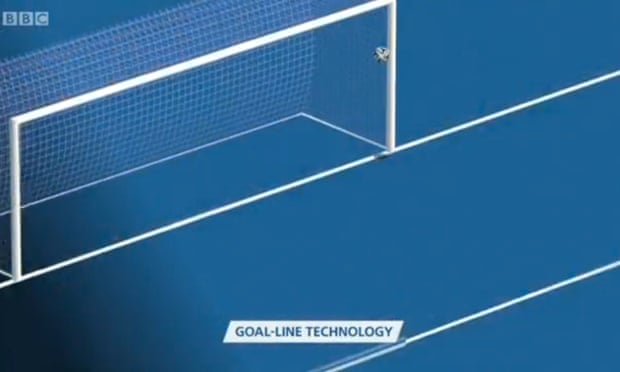
Italy, what's wrong with you? If wrong is really wrong, of course. There is more than an impression about the huge problem Italy has in distinguish between what is right and what is wrong. It is basically a problem of principles and ethics when the definition of good and evil are put in question, as it is for Italians.  There is a small apparently not meaningful episode which showed the Italian approach. It happened at the beginning of the year, during a football match. For the first time the Italian Serie A tested the goal-line technology, a new generation tool able to understand whether the ball crosses the goal-line. With ASRoma playing in Verona and leading 3-2 against Chievo, the referee man granted a free-kick to Chievo. The striker shot and scored a goal, but it was possible to convalidate it only after have watched the goal-line technology elaboration of the free-kick. In fact the referee man didn't give any goal, then he had to correct himself saying the new score of the match was fixed on 3-3. All the media started reporting that ASRoma was «punished» or «condemned» by technology. Nothing more wrong. No one has been punished, and technology was not responsible fot nothing but making what it has been created for. Technology made clear what was not, avoiding a wrong decision and, as a direct consequence, an eventual unfair defeat. So, what happened is basically fair. People should underline that technology made justice instead of saying it condemned somebody. This clearly shows how in Italy the idea of right and wrong has another nature, well different from that one shared outside the country.

Sunday, 6 December 2015

«A bright future for Italians, not for Italy»


Indro Montanelli was journalist and historian. It is considered one of the greatest Italian journalists of the 20th century. In this short video he was asked about the future of Italy, and the answer well summarise the situation offering a picture of a country where nothing has changed. Here the full English transcript.

Question (journalist): What future will Italy have?
Answer (Indro Montanelli): Should I really tell?
Q: Let's try
A: No future for Italy. A country that ignores its past and doesn't care about its past cannot have a future. I remember a definition of Italy I received by one of my greatest job teachers, Ugo Ojetti, a former great journalist. He told me once «Haven't you understood yet? Italy is a country for contemporary men, with neither ancestors nor posterity because with any memory». I was 25 years old, and I considered these words as a sally, a paradox, then I realised Ojetti was absolutely right. Italy has an extraordinary history, but it remains unknown and unstudied. Italy is a country with no self-awareness. If you ask me «what future for Italians?», I would reply I expect a very bright future. For Italians, not for Italy! Italians are the most skillful ones to get in a international pot, because they lack of national barriers. First of all Italians are leader in certain professions. I have no doubt we will be the best shoemakers, the best tailors, the best hotel managers, the best cooks in Europe. I say with no negative sense: in slavish jobs we are totally unbeatable. But we are unbeatable not only there. The Italian individuality can impose itself in science, too. I'm sure Italian scientists, Italian doctors, Italian specialists, Italian physicists, Italian chemists will emerge once they will be in a European environment. Italians will impose their skills. But just the Italians, not Italy. Italy won't be there, because Italy is not there. Italians who go to Germany will become Germans.
Q: Are Italian so flexible?
A: Very flexible. Italians are not the Jews, who have been preserving their identity since 2.000 years. Jews remain Jews, Italians don't.
Q: Is this a fault?
A: A fault. And a virtue, too. I mean I don't see a future for Italy, while I see a bright future for Italians.

Tuesday, 7 April 2015

«Tortures at the G8 summit in Genoa»

No doubt to The European Court of Human Rights: in 2001 there has been a «violation» of Article 3 of the Convention for human rights

by Emiliano Biaggio

In Italy tortures were perpetrated by policemen at Diaz school in Genoa, according to the European Court of Human Rights. In a recent judgement on the G8 summit held in 2001 the Court found that there had been a violation of the European Convention on Human Rights on account of acts of torture sustained by the applicant and of the Italian criminal legislation, which was «inadequate for the punishment of such acts and not an effective deterrent against their repetition». The decision by the Court based in Strasbourg was taken at unanimity. All the members agreed in Italy «there has been a violation of Article 3 of the Convention in its substantive aspect». The article states «no one shall be subjected to torture or to inhuman or degrading treatment or punishment», but it was not the case for Arnaldo Cestaro, who was found victim of inhuman treatment by the Italian authorities. The Court considered that the applicant «suffered moral damages because of the violations». Therefore the Court, ruled «it is appropriate to grant the applicant 45.000€ in  this respect».

Tuesday, 17 February 2015

Italy missing in the EU

No communications, no presence. Italian role in the European affairs is not a front line one

by Emanuele Bonini

From leading actor to walk-on actor. Italy changed its role in the EU affairs, and now the ancient importance as a member State and the old relevance as contribution made to the European Union are just a remember of the olden days. In a context where it is extremely important to be present, Italy is missing. Prime ministers and ministers never hold press conferences, never express the official position, and never offer a point of view of the situation. In Brussels politicians always speak at the arrival and, above all, at the departure. It is useful to can understand how the general feelings are before meetings and what has been decided at the end of the meeting. More simply is just communication. Communicating Europe is key, and there are those who speak a lot (even too much), and those who, on the contrary, doesn't speak at all. Italians belong to the last category. Belgium, France, Germany, Luxembourg, Spain, the United Kingdom: all the relevant countries spend time to explain what their position are, how they conducted meetings and negotiations, where problems have been meet. Italy prefers a quick doorstep, which means a couple of questions and nothing more. We already wrote about this topic: the point number four of our analysis on Matteo Renzi's skills remained unchanged. But this is Italy today: just a «bad-willing tourists of democracy», to said it as it would do an Italian expert of the subject. No way: in time of troubles what is constantly visible is the Italian absence from the European political scene. What a shame! Italy has been one of the six founder of the European Union. But, of course, it happened in the 50's.

Tuesday, 10 February 2015

Italy is not a country for women

«Still far from satisfactory results in gender equality», according to a study issued by the European Parliament

by Emanuele Bonini

According to the European Gender Equality Index Italy is ranked amongst the countries in the EU with the lowest gender equality, revealed a study from the European Parliament. Italian performance is above the EU average in one area only, namely health, thanks to Italian women’s long life-expectancy. «In any other respect the situation is far from being satisfactory». Policies to re-address the gender unbalance «have been cautious», while progress in the legal framework has been promoted mainly by Directives coming from the EU or by pressures of the civil society. More in general, «Italy lacks of a proper gender infrastructure at central level to promote, coordinate and monitor gender-equality initiatives». According to "The policy on gender equality in Italy" report, the in-depth analysis for the committee on Women’s rights and gender equality, some legislations have been introduced but they are far from a full implementation, and the economic crisis is threatening some of the achievements. Right now the overall supply of care services that are meant to support female employment «is weak and affected by budget cuts». This is particularly true as regards services for the elderly and out-of-school childcare, «since little investments can be expected in this area». Women’s employment and economic independence is jeopardised both by increasing difficulties in reconciling work and family life and by the increasing loss of jobs in the service sector in the second wave of the crisis since 2010. Italy is not a country for women. The overall picture which emerges from the report is that «in many fields Italy is still far from reaching satisfactory results in gender equality, in spite of relevant progress under the pressure of women’s movement, civil society and European legislation». Criticalities are a lot, and the report explain in detail where gender equality is still missing.


Thursday, 13 November 2014

Italy, the Odyssey of reforms


(Italy, the Odyssey of reforms)

Italy reform progress is uneven, warned the EU

Measures have been taken, according to Review of progress on the implementation of reforms. But «outcomes remain uncertain»

Pier Carlo Padoan
by Emanuele Bonini

Reform momentum at government level has picked up but progress is uneven, said the European Commission in the Review of progress on policy measures relevant for the correction of macroeconomic imbalances. «Several ambitious reform packages that could represent a step-change still await full adoption or further implementing decrees and outcomes thus remain uncertain». Loooking more in detail, «significant uncertainty surrounds the spending review, which is key for financing important measures in the coming years». The programme is lagging behind initial plans announced in 2013 and a recent change in approach «may lower the quality of the cuts», while the implementation of the privatisation plan in 2014 «has incurred a delay». Furthermore the implementation of the enabling law to reform the tax system is progressing, but «progress in the important areas of tax expenditure revision and environmental taxation is still limited». Italy is doing not well, according to the EU Commission report. Not a good new for the country, since the implementation of structural reforms is crucial to avoid Macroeconomic imbalances procedure (Mip). Italy remains under control, according to the European Commission. «Progress in the coming months will be crucial to evaluate Italy's success in implementing measures to address its imbalances». Looking at the state of play of MIP relevant reforms, Italy still has a lot to do.

Public debt reduction. Italy's very high government debt is an important burden for the economy and a serious source of vulnerability, in particular in the current low growth and inflation context. The large stock of public debt implies substantial refinancing risk and makes the country vulnerable to sudden rises in sovereign yields and financial-market volatility in periods of increased risk aversion, with potential spill-over effects towards other countries.

Friday, 18 July 2014

Matteo Renzi and his poor political talent

Absent abroad and little aware of diplomacy, the Italian prime minister has no ideas to offer

Matteo Renzi
Opinion

Italian prime minister Matteo Renzi is not able to rule a country. Democracy is democracy, and a person elected (it's not Renzi's case) will be fired by the people in the next elections if in his mandate a politician didn't show skills. Unfortunately Italy is always Italy, a country where people could confirm their preference for Silvio Berlusconi, another leader not capable to represent a country abroad. In managing Mogherini's affair, Renzi showed how too little is his political profile. Let's examine more in detail the situation.
 1) generally speaking a candidate has to be put on the table few days before the negotiation. Federica Mogherini's name was put months ago, and during such a long period her option was replaced by others. Franco Frattini should have been taught: the Italian candidate for NATO was presented two years before Anders Fogh Rasmussen's end of mandate, and we all know who was replaced by; 
 2) During a negotiation a strategy is key. In case of EU, Renzi showed to have not a plan. He just decided to make Federica Mogherini the new High Representative without having a second or a third option. Without a possibility of choice loosing is certain. And Renzi will risk to loose. Again, most of the time politicians are actors: they say to want a thing, but in reality they want another one. Renzi just wants Mogherini where Lady Ashton is sitting now, but his real goal is to have Mogherini where Lady Ashton is sitting now. Not a good strategy at all;