Showing posts with label EU. Show all posts

Sunday, 6 June 2021

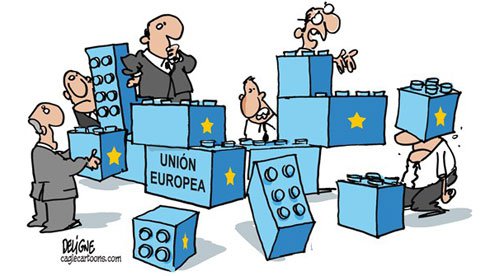
Conference on the future of Europe, or the failure of Europe

Presented as the highest achievement of the EU democracy, the initiative is nothing but the proof of the incapability of an entire leadership with no vision

by Emanuele Bonini

Conference on the future of Europe. Everybody has been talking since the beginning, since the initiative was launched in 2019. An unprecedented event, presented as the most prominent moment in the European democratic life. The Conference (also known as COFOE) is «a citizen-led series of debates and discussions that will enable people from across Europe to share their ideas and help shape our common future». That’s how the European Commission described this historic moment never experienced before. Whatever the intention can be, please forget about enthusiasm and call the COFOE for what is in reality: a failure. A failure of an entire political system and its leadership.

Why is the COFOE a failure? In order to better understand we need to come back to the past, when everything started. When in 1951 the treaty establishing the European Coal and Steel Community (ECSC) was signed, no Conference on the future of Europe took place. When six years later the European Economic Community (EEC) was founded, no citizen-led debates were held. The history of the European integration has always been about political decisions. Everything happened because of governments working together on behalf of their respective peoples. That’s how representative democracy works.

Citizens are called to elect men and women who have the duty to take initiatives and decisions for them. Today this system is not functioning anymore. Elected people are incapable of taking any initiative, so they are obliged to ask their electors what to do.

Ursula von der Leyen, the president of the European Commission, stated that «people need to be at the very centre of all our policies». She also expressed the wish that «all Europeans will actively contribute to the Conference on the Future of Europe and play a leading role in setting the European Union’s priorities».

Here comes the real issue. It shouldn't be up to citizens to set up political priorities, politicians should. If the latter cannot make it out, then they should be replaced by more capable and courageous decision makers. Yes, courage. It is a matter of courage and visions. The so called leaders and the supposed-to-be leaders don’t lead. They don’t decide. They have no vision, and so they cannot provide perspectives. 

Sunday, 27 May 2018

EU citizens ready to reject the establishment

Next European elections will take place on May, 2019. According to the latest Eurobarometer survey, 56% of voters believe new parties and movement can bring real change

 by Emanuele Bonini

The European Union as it has been till now seems doomed to become a memory of the time that was. If figures are going to be confirmed by vote, the next European Parliament will be in majority formed by anti-system MEPs. The majority of the European is ready to bet on the anti-establishment politcal forces, according to the latest Eurobarometer survey.

Marine Le Pen’s Front National, Geert Wilders’ Pvv, Matteo Salvini’s Northern League, Luigi di Maio’s 5 Star Movements… All these parties are considered as the real alternative to the non-proper functioning of the European Union.

According to the survey, more than the majority of the Europeans believe new political parties can better change and shape Europe. That’s true for the 52% of the people living the Eurozone and for the 56% of those in the non-single currency zone of the EU. Overall, the 56% of the asked people is of the idea that «We need a real change and this is what these parties and movements can bring», with Italy – one of the EU founder Member States – with the most anti-establishment sentiment recorded among all the (currently) 28 Countries (71%).

Sunday, 18 February 2018

Italy's problem is not Europe, is Italy itself

The Country suffers the European decisions because of its political non weight in the EU. Instead of autocriticism national political class fed euroscepticism

by Emanuele Bonini

If 64% of EU citizens believe in the benefits of being part of the Europen Union, in Italy only 39% of the national population does, marking the lowest rate in Europe. Italy has thus become the most eurosceptic country among the 28 (soon 27) Member States. The change of mind of one the founders of the today European Union is something not be underestimated. It is not only the consequent result of never explained what the EU represent, but the lack of political engagement. The truth is Italy chose not to be part of the Brussels decision process. In the European Union of the Member States, this is certainly an epic fail. But here are all the Italian responsibilities. During last two decades the Italian government have merely thought to domestic affairs leaving to the other countries the duty of taking decisions. A totally absent Italy around the table, togheter with the lies told internally, contributed to feed an always growing euroscepticism in the Italian peninsula.

The uncapability of the Italian political class didn't make possible for the country to be an active player of the European debate. The case of Fiscal compact well shows how Italians live in a parallel dimension. Everybody, from left to right, complain about what is by definition an «inter-governmental» agreement. Inter-governmental means that decisions like the ones foreseen by such a compact were taken by national governments, not by «Europe». More and more in Italy the «blame and complain» game has been played against Europe. The same Matteo Renzi, who always claims to be a true committed pro-European, chose to talk against the European Union in his speeches. Instead of clearlt recall that decision are taken by Member States, he offered the idea of a country continously oppressed by «Europe». Unfortunately, a non-federal Europe cannot impose nothing but what its members agree among themselves. The European Commission only has the power of proposing legislations, and on the basis of these proposals national governments decide what to do.

Monday, 16 October 2017

EU to put an end the profitable detached work

Draft amending proposal of the posted workers directive wants to eliminate the wage differences. In name of labour protection and fair competition

by Emanuele Bonini

Same remuneration and same conditions as local workers, no salary level change in case of subcontractor, publication of all elements of the different remuneration policies in force in the Member States. The European Union made a step forward in the revision of posting workers directive, by adopting the draft proposal containing the new measures. The Employment and Social Affairs Committee approved the legislative text by with 32 votes to 8 and 13 abstentions, paving the way to the negotiations with the European Council. Unless of last-minute surprises, with every probability the Plenary will back the draft bill in the vote scheduled next week. Then representative from the Parliament and from the Member States (Council) will be in the position of table negotiations.

Posted workers account for less than 1% of the overall EU working population, but they are growing in number. According to the EU figures, in 2015 they were 2.05 million, a value increased by 41,3% between 2010 and 2015. The growth of the single market has led to increased wage differences, generating automatic incentives for posting. Workers sent working abroad often earn considerably less than local workers, which can lead to unfair competition between posting and domestic companies, social dumping and exploitation of posted workers. The new draft rules are supposed to stop all that, pointed out one of the two co-rapporteur. «The agreement we have is politically clear: improve the protection of workers and ensure a level playing field for companies in the internal market», said the Elisabeth Morin-Chartier after the commitee vote.

Monday, 17 July 2017

Europe needs migrants, EU report shows

According to the 2017 edition of the European Commission's ESDE review extra-EU people are key to solve the issue of the economic demographic decline

by Emanuele Bonini

Intolerance can't be the answer, fences can't be the political agenda. EU countries need migrants more than ever to address the demographic challenge and its future implication, a study from the European Commission revealed today. Without people coming Europe will collapse, it basically says. Europeans are getting older, and the active population in the labour market is projected to shrink by 0.3% every year with all the consequences. Nowadays there are four working-age people per pensioner, in 2060 they will be just two. «No further migration would exacerbate the demographic challenge», states the document. «Without any further net migration into the EU from now on, the decline of the working-age population would be much stronger» than foreseen.

The 2017 Employment and Social Developments in Europe (ESDE) review offers two different scenarios, by which in 2040 the the active EU population could decline to 247 million people or even to 210 million people. With less active people available and more pensions to pay, future poses critical challenges for the 27+1 EU member States. The only possibility at disposal to host migrants and integrated them into the social and labour environment. «Higher net immigration would allow growth in the working age population to resume in the medium term», according to the 268 pages report. In time of fence-building, it appears hard to see national governments allowing asylum seeker applicants come and stay. Decision makers should therefore revise their immigration policies.

Tuesday, 11 July 2017

«No EU-UK flights after Brexit», Ryanair chief warns

Air carriers can't wait the end of negotiations, scheduled for March 2019. Connections to be disrupted already in September 2018, with British government considered as no problem-solver

by Emanuele Bonini

Brexit «will bring chaos for aviation», with no EU-UK air connections of any kind after March 2019, Ryanair CEO Michael O'Leary warned today. Although the conditions for exiting the European Union has to be found the 29th of March of that year at the latest, «for carriers the deadline is September-October 2018, when flights will be abolished», he said in a public hearing held in Brussels. «The aviation sector won't wait» so long, and clear conditions have to be in place before the scheduled roadmap in order to allow companies to operate. Both technical and praticals reason require the commercial environment to be clearly defined and predictable. Slots have to be resersed in advance, but in order to ask for them it is necessary to know whether operating flights is possible. So, be ready for the worst. «There is the perspective of not having EU-UK flights in April, 2019. With no deals, flights will be deleted, as the 2019 summer holidays will»

The major concern for the Irish carrier is the uncapability of the British government to find the way out. «British have no idea of they are doing, have no plans, and have no idea what the want» for the future, O'Leary criticised. With these premises it has not a surprise if the touristic sector is in allarm. TUI Group, the world's number one tourism business, has commissioned a study with the aim of investigating the possibile side effects of Brexit. In case of EU-UK flights black-out the EU27 tourism industry stands to lose some €21 billion in business, warned Ralf Pastleitner, Director International Public Policy, Group Corporate & External Affairs of TUI Group. GDP could shrink of 2.8% in Malta, and of 0,5% in Spain, just to give an example. The fact that such a study has been tabled is the proof that concerns are there, are real and the business world is working in order to be ready to address all the possible scenarios, included the worst ones.

Wednesday, 8 March 2017

EU remedy to migration issue is children detention

The controversial proposal in the recommendation to the Member State, formally adopted today

"To migrate is a right. No jail for migrants"
by Emanuele Bonini

Children can be imprisoned as migrants, according to the latest proposal of the European Commission. The controversial rule is foreseen by the recommendation on making returns more effective when implementing the Directive on Returns. New dispositions have been adopted in principle last week, but formal adoption will take place when all language versions are available, which is expected to happen today, 8th of March. It means that from today the EU legislation can be applied in the tougher manner, and the Member States «should not preclude in their national legislation the possibility to place minors in detention, where this is strictly necessary to ensure the execution of a final return decision in sofar as Member States are not able to ensure less coercive measures than detention that  can be applied effectively in view of ensuring effective return».

In European Commission intentions, returns have to speeded up. In the meanwhile, irregular migrants have to be managed and kept on the EU territory until they are not sent back to their country of origin. It has written in the recommendation that «for the purpose of effectively ensuring removals of illegally staying third-country nationals, Member States should use detention as needed and appropriate, and in particular where there is a risk of absconding». A initial period of maximum six months of detention should be foreseen by national legislations, with the possibility of extent up to 18 months in case of need. In order to better deal with the phenomenon of irregular migrants - all those who are not entitled to apply for international protection - Member States are asked to put in place measures to effectively locate and apprehend third-country nationals staying illegally, wherever they are.


Sunday, 1 January 2017

Happy new (complicated) year, Europe!

2017 will be politcally challenging for the EU, whose future has not to be given for granted. Euroskepticism in France, Brexit and Trump could shout down the single project

by Emanuele Bonini

The year just begun could be one of the most challenging in the recent contemporary history of Europe. A lot of sensitive dossiers are still in search for an adoption, and new question marks will come from the various national elections that will be held all across Europe, as well as from the political choices taken outside the continent, above all on the other side of the Atlantic. The new US administration will be not an easy task for the EU, whose future is more unpredictable in light of the raise of euroskepticism. France and the Netherlands, amongst the six nations who promoted the European integration, could choose the national option, giving the coup de grâce to Europe already in troubles after the British farewell. Here we have the 2017 political calendar of the EU, with all the key dates already scheduled:

January the 1st. The first ever Maltese rotating presidency of the Council of the EU begins. There are those who consider a small country like Malta exposed to the pressure of bigger countries, with all the possible consequences for the European dossiers. We will see.

January the 17th. The European Parliament is expected to elect the new president. In pole positions are Gianni Pittella (S&D) and Antonio Tajani (EPP), both Italians.

January the 20th. Donal Trump will officially assume the presidency of the United States of America. The EU was scared about Trump's personal attitude in dealing with European affairs and the transatlantic relations. Starting from this day, everything will start to become clear.

March the 15th. General elections are held in the Netherlands. This is perhaps the first political test for the future of the European Union, since one of the EU founder Member States is exposed to the risk of a victory by a euroskeptic party. Geert Wilders' Party for Freedom (Partij voor de Vrijheid – PVV) could control the national parliament or influence its activity. A problem, considering that international agreements as well as EU agreements need the approval and the ratification of national Parliaments.


Friday, 9 December 2016

A EU large-scale profiling operation against migration

Ministers for Internal Affairs reached a controversial agreement for a revision of the Eurodac database. The draft regulation to negotiated with the Parliament

by Emanuele Bonini

Migrants like serial killers? The Council of the EU is ready to start a large-scale profiling operation as response to the migration crisis. It is only about negotiating with the European Parliament, but the controversial decision has been taken: Europe will keep files on asylum seekers arriving in EU territories. The position of the Member States was reached today during the meeting of the Justice and Home Affairs Council. Ministers agreed to recast the Eurodac database in a more comprehensive manner: in addition to fingerprints, according to the draft proposal it will made compulsory the collection of personal data such as names, surnames, nationality and pictures.

The Eurodac database, which was established in 2003, is an EU asylum fingerprint database which provides fingerprint evidence to assist in the application of the Dublin Regulation, which determines the Member State responsible for examining an asylum application made in the EU. Ministers today agreed a common approach to adapt and reinforce the Eurodac system in order to expand its scope, with a view to facilitating returns and helping tackle irregular migration. On the basis of the position of the Council, besides collecting an additional biometric data - facial image, it will also allow member states to store more alphanumeric data in Eurodac, such as names, dates of birth, nationalities, identity details or travel documents of individuals.

The decision is questionable, raising concerns as regard privacy, the storage and the treatment of the information, as well as the legal aspect of the new regime. Basically the Council of the EU is authorising nothing but a measure comparable to a criminal profiling.

Wednesday, 7 December 2016

Erasmus programme for workers starting in 2017

The European Commission announced the launch of ErasmusPro, the new initiative for the exchange of young apprentices

by Emanuele Bonini

Young students of work, go ahead! Starting from 2017 the European Commission will activate Erasmus Pro, the new programme for the mobility of apprentices and trainees. Finally the EU executive body will launch the real Erasmus programme for workers, an initiative sponsored already during the previous legislature by Antonio Tajani, in charge for Industry and the entrepreneurship under the Barroso Commission. The idea was to reproduce the well known EU project of student exchange in a new model thought just for the labour market. No the dream comes true.

Until today small period of apprentices abroad have been financing through Erasmus+, the14.7 billion Euro catch-all framework programme for education, training, youth and sport. Next year  the Commission will launch "ErasmusPro", a new dedicated activity within the Erasmus+ programme to support long-duration (6-12 months) placements of apprentices abroad. In addition to the current 650.000 apprentices that will benefit from mobility under Erasmus+, in the period 2017-2020 these measures will open up the possibility for 50,000 additional young people to spend at least 6 months of their learning experience in another Member State, compared to the much shorter period (1 month on average) registered so far.

The Erasmus programme for workers will be financed by the EU funds. In addition to the already EU-level financial allocations, on 14 September 2016 in the context of the mid-term review of the Multiannual Financial Framework (MFF) 2014–2020, the Commission proposed to increase the budget of Erasmus+ by €200 million. These new extra money will be used for the new initiatives such as ErasmusPro

Thursday, 24 November 2016

EU-Turkey ties endangered after anti-Erdogan vote

The European Parliament called for a freeze of the accession process. Kurtulmuş: «They are not a reliable partner»

by Emanuele Bonini

Time of dialogue maybe is not over yet, but time for negotiations is. The European Parliament voted in favour of a temporary freeze of EU accession talks with Turkey, in a resolution approved today at large majority (479 votes to 37, with 107 abstentions). Although the resolution is not legally binding, Europe sent a strong political message to the Turkish authorities: there will be no steps forward in the EU membership negotiations until the country will be back in line with the EU values. Ankara reacted by strongly condemning the vote. MEPs criticized particularly the «disproportionate repressive measures» taken by the Turkish government since the failed coup attempt in July 2016. According to them, these measures «violate basic rights and freedoms protected by the Turkish Constitution» itself. Furthermore, the resolution rehiterated that the capital punishment is the red line not to be crossed. A re-introduction of the death penalty by the Turkish government would lead to a formal suspension of the accession process, said MEPs.

No doubts amongst groups

The three major political groups voted togetherin favour of halting the accession process. «The disproportionate repression measures taken by Erdoğan forced us to urge the Commission and Council to temporary freeze the accession talks with Turkey, because we can no longer remain silent in the face of Erdoğan's outrage and the evident breaches of the rule of law and human rights in Turkey», said the president of S&D group, Gianni Pittella. «This resolution is a clear political message to Erdoğan that should not be misinterpreted: we want Turkey to be anchored to Europe, to democracy and to rule of law». Mafred Weber, the president of EPP group, defined the decision taken by the Plenary «a strong signal for the protection of fundamental values and rule of law». The same kind oof message came from the ALDE Group leader, Guy Verhofstadt. «Turkey is an essential partner for the European Union when it comes to energy security, stabilising the region around Syria and Iraq and the fight against terrorism. However it is wrong to pretend that we can advance on any of these fields by trampling on European values and principles, by closing our eyes as President Erdogan closes down independent media outlets, jails journalists and criminalises members of his Parliament».

Friday, 18 November 2016

No EU relevance makes Juncker frustrated

Anti-Trump statements explained by the lack of consideration  for the European Union, which has not attribution in foreign affairs matters

by Emanuele Bonini

What is there behind the "Juncker case"? Stress, mental sickness of any kind, rudeness? Frustration. The right explanation is frustration. The European Union has no foreign policy relevance, because it is foreseen it has not to have. Let's rewind the tape and start from the beginning. Commenting Donald Trump's victory in the US presidential elections, the president of the European Commission, Jean-Claude Juncker, said that with the next occupant of the White House «we'll waste time for two years while Mr. Trump tours a world that he is completely unaware of». There is a motivation for such a statement. Immediately after Juncker sent a letter to the president elected to congratulate with him and to invite him to Brussels. As fas as everybody knows that letter never got an answer.  Considering the European Commission is constantly under the attack of the EU Member States, it appears clear the sense of frustration of the Commission's chief. Juncker and the body he is responsible for, got little consideration at home and none abroad.

Having said that, there is the possibility Mr. Trump knows really well the world. The impression is he's aware that in foreign policy the EU never existed. By treaties the foreign affairs are competence of the Member States.  When it comes to set strategies and take decisions, national governments are the true plenipotentiary players. Showing a pragmatic approach and a clear sense of realpolitik, it is undeniable that the fist thing to do is to deal with single European leaders. The EU is not a priority because it simply can't be. Who does Federica Mogherini represent? The EU has an external action, but not a foreign affairs office. It is true that the EU is in charge of negotiating trade agreements, but Trump seems not to have the Transatlantic Trade and Investment Partnership (TTIP) in the list of his priorities. Juncker is the president of a body with limited powers. Until the European Union will have not attributions in foreign affairs policies, it can't surprise if leaders from the rest of the world will decide to bypass the EU. It is not a question of dividing Europe, it is just a question of the nature of the EU. And then, let's be honest: Europe has never been unite in foreign affairs.

Tuesday, 25 October 2016

No time for back to Schengen, said Europe

The Europen Commission prolonged internal border controls for further three months. No restoration of free movement before 2017

by Emanuele Bonini

There will be no «Back to Schengen» for Europe by the end of the year, as originally planned. The European Commission gave green light to the extension of the internal boder controls reintroduced in some Member States as a consequence of the migration crisis. Temporary checks were re-established in Sweden until the 11th of November, and in Germany, Austria and Denmark until the 12th of November. These countries are now allowed to keep their borders closed in derogation to the EU free movements rules for further three months. This means internal borders will be kept closed until mid-February 2017, against the European Commission forecasts. As decided in its migration roadmap, December 2016 was supposed to be «the target date for bringing to an end the exceptional safeguard measures taken, if the overall situations allows». Cleary it is not the case.

The European Union therefore experienced a new failure in the migration policy. The idea of come back to the normal situation by the end of the year was swept away by the European Commission college meeting. Vice president Frans Timmermans recognized the insuccess. «The Schengen area without internal borders is a historical achievement which we must preserve. We are working hard to return to a normal functioning Schengen area as soon as possible, and we have made significant progress. But we are not there yet». The European Commissioner for Migration, Home Affairs, and Citizenship, Dimitris Avramopoulos, expressed the change of political line by no setting new deadline for the restoration of normal conditions. «We have one clear priority and determination: to safeguard Schengen and to restore a normally functioning Schengen area as soon as the conditions allow for it».

Tuesday, 18 October 2016

No full control in EU Commission spending, warned ECA

The European Court of Auditors found breaches in the governance of the Berlaymont. «The Commission diverges from, or does not fully adhere to, international best practice»

by Emanuele Bonini

There is a lack of control in spending activity of the European Commission, according to the latest report from the European Court of Auditors (ECA) published today. New rules have not been implemented, marking a difference between the actions foreseen on paper and those effectively in place. After the resignation of the Santer Commission, in March 2000 the Commission approved the «Reforming the Commission» White Paper, with the aim of modernising the governance of the Commission. After more than a decade improvements are still missing, as pointed out by the ECA. The Commission abolished the financial controller function in order to make the directors-general responsible for the legality and regularity of spending by their Directorate-Generals (DGs). DGs report annually on their management via the annual activity report. But «mechanisms to hold individuals to account for their contribution to internal control are relatively undeveloped». In other words, The Commission «has not put in place staff evaluation criteria linked to this objective». In practice all this means the European Commission «has not established a basis to determine whether the declarations made within annual activity reports are well-founded, or established a benchmark against which to hold DGs accountable». The European Commission expenditure is thus out of control.

Who is responsible for what?
New rules make difficult to establish who is responsible for what can happen in governing the European Commission, revealed the European Court of Auditors in the same report. In fact the distinction made between the political responsibility of commissioners and the operational responsibility of directors-general means that «it has not always been made clear whether ‘political responsibility’ encompasses responsibility for the directorates-general, or is distinct from it». Recent organisational reforms «are beginning» to address some of the risks of a silo culture, the typical mindset that occurs in organisations, which is inward looking and resists sharing information and resources with other people or departments within the same organisation. According to ECA in order to continue to address key risks, the Commission will need to further strengthen the governance structure across the institution.

Friday, 30 September 2016

Figures revealed the failure of the EU migration agenda

One after the strategy defined to manage the refugee crisis is well far to be implemented

by Emanuele Bonini

The European agenda for migration didn't work. Doesn't work. One year after, migrants are still in Italy and in Greece waiting to be relocated among the other EU Member States. Despite all the efforts of the European Commission, national governments didn't deliver. Despite what the European Commission can state, latest figures show an epic fail in dealing with migration crisis. As of 26 September 2016, just 1,196 out of 39,600 people have been relocated from Italy to the rest of the EU, while just 4,399 out of 66,400 refugees have been relocated from Greece.  In total, in a year 5,595 persons were transferred inside Europe, namely the 5,2% of the 106,000 migrants that Member States promised to take care. A clear sign of how national governments are committed in finding a solution and put an end to the crisis.

The 22nd of September, 2015, the European Council agreed to put in place a relocation system allowing the redistribution of all migrants arrived in in Italy and Greece. The Members of the European Union should welcome 120,000 migrants in two years, but looking at the rhythm of the relocations made until now, it seems unlikely that final goal could be achieved. The special formula behind the relocation scheme, which is mandatory on a voluntary basis, is the main reason of such a delay. Member States simply don't want to act.

The European Commission tried to defend its own strategy. «Our measures work», stated the EU Commissioner in charge for Migration, Dimitris Avramopoulos. Unfortunately reality suggests it is not true. If anything worked, it didn't properly. According to Avramopoulos «considerable progress have been made as a Union on the refugee crisis», but figures are there to contradict him. Of course 5,595 relocations are a great achievement compared to none, but they are a failure compared to what it is the final goal.

Tuesday, 27 September 2016

Draghi called States for delivering and respecting rules

«Monetary policy alone is not enough», said the president of the European Central Bank. «Trust is essential». Warnings to Italy

by Emiliano Biaggio

Rules have to be respected. This means structural reforms have to be delayed, new additional deficit is not allowed. This means also Italy has to deliver rather than complain. The president of the ECB, Mario Draghi, stressed yesterday national government have to do more, in the respect of the existing framework. All the instruments to boost economy are there, according to the chief of the European Central Bank. On the contrary, political will is still lagging behind. And a change in this sense is needed.

Member States have to act
«The monetary policy of the ECB served to limit the negative effects of the shock, but monetary policy alone is not enough to deliver growth», pointed out Draghi in the European Parliament. «Other policy actors need to do their part, with growth-friendly fiscal and structural policies which will contribute to a self-sustaining recovery and increase the economic growth potential». It is not the first time Draghi calls the EU Member States to do more. He has been repeating it since he took office, in 2011. Once again, Member States have been invited to act.

Respecting the rules
«It's important rules are respected». Draghi made clear neither deviations nor derogation from current legal framework are possible. He recalled that «for further European integration to be feasible and acceptable, trust among its nations and people is essential». As a consequence, «to bolster such trust, it is important that agreed rules are respected». In this sense, according to the ECB chief is good to keep in mind that «in the existing rules there's many flexibility». A clear warning to Italy, even though he didn't do any explicit reference.

Wednesday, 7 September 2016

«National sovereignty is a myth»

Globalization and economy make States not free to play State role, warned Bruegel think tank

by Emanuele Bonini

«National sovereignty is a myth», said yesterday an ALDE Member of the European Parliament during the annual conference of Bruegel held in Brussels. In time of independence claims by governments and far-right parties, in Sylvie Goulard's opinion it has to be said such claims have no reason to be. As shown by the Apple case «Ireland pretends to have sovereignty, but the Irish government is in the hands of the same companies they have granted profitable tax rulings». Thus, fiscal policies clearly show how the national independence doesn't exist in practice. And globalization suggests single States alone can do very few.

«What people can't understand is that the State can't play a national role in a globalized world», stressed Romano Prodi, former president of the European Commission. So Brexit is not the answer. Asking for less Europe in order to get more sovereignty means nothing but lose power. Reintroducing national currencies, symbol of national independence, would be a mistake. «If the Euro falls, then the EU becomes just a weak trade area».

Wednesday, 20 July 2016

Europe is just about the States

Blaming the EU is useless: decisions are up to governments, responsibilities are nationals

(click to enlarge)
by Emanuele Bonini

If things go wrong it is because of the Euro-bureaucrats in Brussels and their decision. How many time do we listen to complains like this? From Italy to Czech Republic, from the United Kingdom to Hungary, there are no leaders who abstain to blame Europe. In spite of what is repeated every day by every government, Europe is not a problem. The is not and cannot be the main root of all evil pure and simply because Europe doesn't exist. Blaming the European Union for difficulties, problems or decisions considered as useless or rummy, is nothing but a way to put domestic problems away. Here's a short guide to dismantles all the myths built up all around the twelve stars flag.

Europe is about member States. By definition the EU is an associations of sovereign coutries. Article 1 of the treaty on the EU, clearly states «the High contracting parties establish among themselves a European Union, on which the Member States confer competences to attain objectives they have in common». As a consequence, there are no central powers. The European is not a federation. Europe is a confederation, a league of States. Under a confederal regime, in contrast with a federal one, the central authority is relatively weak. This is the case of the European Union, where the European Commission - to be considered as the "government" - has no power of imposing laws. By treaties, the Commission has only the legislative initiative («The Commission shall promote the general interest of the Union and take appropriate initiatives to that end», article 17.1), which means legislative proposals can be blocked, modified, rejected at any moment. This is a further example of how EU decision are not imposed.

Wednesday, 6 July 2016

Farage to stay in EU for promoting new Brexits

Former UKIP leader will not leave the European Parliament. He will work «with parties and movements across Europe to help them get their independence»

(Nigel Farage)
by Emanuele Bonini

Nigel Farage the destroyer. After having led the United Kingdom out of the European Union, the fresh former leader of UKIP announced today he will continue his activity of dismantling the EU. «Eurosceptic feeling is spreading all over Europe. I will be working with parties and movements across Europe to help them get their independence», told reporters in the press conference held in Strasbourg. Farage made clear he will not leave his seat at the European Parliament. «I will continue my work in Strasbourg once article 50 will be triggered», said referring to the part of the Treaty on the functioning of the EU regulating the withdrawal of a Member State from the European Union. In other word, Farage wants to be in Europe to destroy Europe from the inside as only real saboteurs can do. He said it is sure after Brexit «nothing will ever be the same again», and his personal aim is now promoting new Brexits as it happened in the United Kingdom

«You destroy for the sake of destruction rather than build something for your citizens», replied the vice-president of the European Commission, Frans Timmermans. «Is this all you have to offer?» The answer is yes. Another MEP supported the idea of denying Europe. «I'm in favour of a Czexit» (the Czech version of Brexit), screamed Petr Mach from the eurosceptic Free Citizens Party, allied to UKIP in the EFDD group and close to Nigel Farage. The latter is still president of the EFDD group, and Petr Mach is one the vice-presidents of the same parliamentary group. Here we have Farage's personal mission to export the anti-European sentiment. The English man will carry on his battle against the European Union, and he promised (or threatened?) to «return in five years with no EU». According to him in five years, there will be a Europe based on the 1940 idea of nations which decide to have trade and cooperate». Unfortunately in 1940 Europe was engaged in the second world war and in that specific year London was almost razed to the ground by German air-strikes. Indeed, this is all Farage the destroyer has to offer. A fair deal, isn't it?

Monday, 4 July 2016

Brexit, new considerations

Farage's resignation is the best plot twist (or simply plot?) of the British tragicomic story

by Emanuele Bonini

A lot has been already said and written over Brexit, even on this blog. Latest developments impose new considerations on, and make further reflections compulsory. After having sold the Brexit as the best option for the country, the entire political class of Britain is escaping from responsibilities. David Cameron already announced his resignation as prime minister, Boris Johnson took a last-minute decision of renouncing the take over the leadership, and finally the UKIP leader Nigel Farage stepped down, too. No jokes: the winner of the Brexit campaign is now leaving politics. «I have never been and I never wanted to be a career politician. My aim in politics was to get Britain out of the European Union. Now I fell I have done my beat and I couldn't achieve more. I think is right I should now stand aside as leader of UKIP». This is Farage's statement made to announce his resignation. Now, how many politicians do resign after having achieved their goal? This question alone is enough to see how irresponsible are decision makers are in the UK, and how fool were citizens to believe to any single word of this man. A true leader would use his victory to built his career and fortune, but Farage was not a politician, as he personally admitted.
Cameron, Johnson, Farage: all these men brought mess in the country and they now leave to other people the duty of re-establish order. Well done.

Farage said he achieved what he wanted, and this is to him a right reason to quit the scene. No stories, please! This a real escape! People struggling for a political purpose cannot leave once they were fighting for. If Cameron stepped down after the outcome of the referendum is because he was against the Brexit, and this means he has been totally out of mind in calling for such a referendum. What about Boris Johnson, great conservative in favour of leaving the EU? He got what he wanted but immediately after disappeared from the political arena. Farage has been the last one in chronological order to leave, we can say properly. Why does he leave? Because he is nothing but a selfish, superficial, mistaken man. As everybody (and more than everybody) activated a machine of which he has lost the control. UK leaders wanted to blackmail the European Union by playing the lethal game of the Russian roulette. This bluff didn't work, and now British are left in this situation where have been led by mediocre political class. Mediocre and cowardly political class, it has to be added. No one is facing is assuming his own responsibilities. On the contrary, everybody is leaving to their successor this non-performing legacy.


Related articles:
- Brexit, some preliminary considerations
- Brexit, further considerations