Showing posts with label OPINIONS. Show all posts

Sunday, 6 June 2021

Conference on the future of Europe, or the failure of Europe

Presented as the highest achievement of the EU democracy, the initiative is nothing but the proof of the incapability of an entire leadership with no vision

by Emanuele Bonini

Conference on the future of Europe. Everybody has been talking since the beginning, since the initiative was launched in 2019. An unprecedented event, presented as the most prominent moment in the European democratic life. The Conference (also known as COFOE) is «a citizen-led series of debates and discussions that will enable people from across Europe to share their ideas and help shape our common future». That’s how the European Commission described this historic moment never experienced before. Whatever the intention can be, please forget about enthusiasm and call the COFOE for what is in reality: a failure. A failure of an entire political system and its leadership.

Why is the COFOE a failure? In order to better understand we need to come back to the past, when everything started. When in 1951 the treaty establishing the European Coal and Steel Community (ECSC) was signed, no Conference on the future of Europe took place. When six years later the European Economic Community (EEC) was founded, no citizen-led debates were held. The history of the European integration has always been about political decisions. Everything happened because of governments working together on behalf of their respective peoples. That’s how representative democracy works.

Citizens are called to elect men and women who have the duty to take initiatives and decisions for them. Today this system is not functioning anymore. Elected people are incapable of taking any initiative, so they are obliged to ask their electors what to do.

Ursula von der Leyen, the president of the European Commission, stated that «people need to be at the very centre of all our policies». She also expressed the wish that «all Europeans will actively contribute to the Conference on the Future of Europe and play a leading role in setting the European Union’s priorities».

Here comes the real issue. It shouldn't be up to citizens to set up political priorities, politicians should. If the latter cannot make it out, then they should be replaced by more capable and courageous decision makers. Yes, courage. It is a matter of courage and visions. The so called leaders and the supposed-to-be leaders don’t lead. They don’t decide. They have no vision, and so they cannot provide perspectives. 

Sunday, 17 June 2018

Europe sliding back to WWII pre-war context

Weak democracy and strong nationalism. Traditional forces fighting for the Status Quo, new powers in favour of radical change. And conservatives derailing to more radical positions

by Emanuele Bonini

Forget about the idea of the United States of Europe, and forget about the European Union as it has been so far. There will be no steps forward. On the contrary, on the horizon lies the status quo, at the best. Democracy is experiencing one of its worse existential crisis since the period which generated the premises for what has been know as the second world war, and the today context seems to be not so different from what already was once.
Traditional political forces become weaker and weaker day by day, and the only way they have (or they think to have) to survive is to shift to more radical positions in order to circumscribe extremisms coming from all across the continent. There’s an ongoing self-defensive run based on the assumption by which subtracting argumentations to the populists can save what has been achieved. But this is a tricky experiment. Brexit is there to recall what can happen when a ruling party starts to play the same game of anti-system forces.

Netherlands made clear there is enough EU
Looking at what the prime minister of the Netherlands stated last week during the plenary session of the European Parliament, it becames clear that the time for a further integration is over. «I believe the future of Europe should essentially be about the original promise of Europe, the promise of sovereign Member States working together to help each other to achieve greater prosperity, stability and security». Mark Rutte has no intention of making Europe a federation. A confederation as it is – or, well, as it was in its origins – must be the path to follow. This is a pure conservative vision which means no evolution. «The debate on the future of Europe is not about more or less Europe, but about what the added value of Eu can be». Here we have a genuine political slang showing how EU be too much powerful.


Sunday, 18 February 2018

Italy's problem is not Europe, is Italy itself

The Country suffers the European decisions because of its political non weight in the EU. Instead of autocriticism national political class fed euroscepticism

by Emanuele Bonini

If 64% of EU citizens believe in the benefits of being part of the Europen Union, in Italy only 39% of the national population does, marking the lowest rate in Europe. Italy has thus become the most eurosceptic country among the 28 (soon 27) Member States. The change of mind of one the founders of the today European Union is something not be underestimated. It is not only the consequent result of never explained what the EU represent, but the lack of political engagement. The truth is Italy chose not to be part of the Brussels decision process. In the European Union of the Member States, this is certainly an epic fail. But here are all the Italian responsibilities. During last two decades the Italian government have merely thought to domestic affairs leaving to the other countries the duty of taking decisions. A totally absent Italy around the table, togheter with the lies told internally, contributed to feed an always growing euroscepticism in the Italian peninsula.

The uncapability of the Italian political class didn't make possible for the country to be an active player of the European debate. The case of Fiscal compact well shows how Italians live in a parallel dimension. Everybody, from left to right, complain about what is by definition an «inter-governmental» agreement. Inter-governmental means that decisions like the ones foreseen by such a compact were taken by national governments, not by «Europe». More and more in Italy the «blame and complain» game has been played against Europe. The same Matteo Renzi, who always claims to be a true committed pro-European, chose to talk against the European Union in his speeches. Instead of clearlt recall that decision are taken by Member States, he offered the idea of a country continously oppressed by «Europe». Unfortunately, a non-federal Europe cannot impose nothing but what its members agree among themselves. The European Commission only has the power of proposing legislations, and on the basis of these proposals national governments decide what to do.

Monday, 6 November 2017

Puigdemont, the Catalan Farage

Like in the case of Brexit, former Generalitat Catalana president just pushed for independence without thinking to the following steps and the side effects

by Emanuele Bonini

The Catalan issue showed how irresponsible leaders with nonsense decisions be fatal for everybody. Carles Puigdemont has been seen as a new revolutionary man, and perhaps is still considered in such a way by part of local population and some sympathizer here and there across the world. A premise here becomes necessary: the right of people to self-determination is still there, still valid. No question about. But people invoking such a right and nothing but that right, have not clear in their mind the world they live in. Independence is nothing without international recognition. In order to start a new life independence and sovreignity are nothing but the necessary preliminary step. Then comes the internation recognition, and only after that is possibile to start acting in world. This is something that perhaps mr. Puigdemont didn't explain in Catalonia before calling for a referendum illegal since the first moment.

Puigdemont failed, and he failed basically for two reasons: he had a suicide strategy and he played with the popular sentiment . People never pay attention to their mind, just listen to their impulse and follow the instinct. In Spain there historical problems, never-solved issues re-emerging on cyclical basis. Independentism is something typical not only of Catalonia: there's a not isolated problem of identity in Spain, and this is undeniable. But times are radically changed. Trying to act as in the past it is not conceivable. Globalization changed even the idea of independence, and in time of inter-connected societies the Catalan leaders showed to be completely disconnected from the reality. Being separated today means much more risk elements compared to the XIX century. Having different entities in times of single States could still be OK, but in the XXI century we have are unions, confederations, organizazions, associations, finance. It's totally another story, with completely different rules.

Wednesday, 26 July 2017

Migration is there to stay. So will Europe?

EU more and more disunited in dealing with the asylum seekers crisis, and now it was made clear that mutual solidarity is not a must

by Emanuele Bonini

The first access country is always responsible for migrants and asylum seekers, even in time of crisis, so ruled the European Court of justice today. That means that people landing on the Italian ground can't be allowed to pass through the national territory to submit their asylum application to the EU member State where they would like staying. Juridical clarity was made, now both political measures and practical solutions have to be established as well. Rules are there to stay as they are and always have been, but this doesn't solve the the migration issue. Or, well, it does just in part. First access countries - such as Italy and Greece, in the specific case - are left alone by law in dealing with migrations flows. It's up to them to table credible and sustainable solutions, exactly what didn't happen so far.

It has been recognised that the rules in force have not been thought for managing emergency situations, but under a legal point of view this doesn't justify any derogation to the implementation of the European regulation for the single asylum system, knows as the Dublin regulation. The latter «must be interpreted» in a scrict way: even in front of an emergency («an unusually large number of third-country nationals» arrived to the European Union territory) every transit must be regarded as having «irregular crossing» of the border of the first Member State. This is about justice, which is different from fairness.

Thursday, 6 July 2017

Fact-checking, or the index of our failure

More than a journalistic exercise. Today is a systemic need to get away from an increasingly widespread practice of hide the truth

by Emanuele Bonini

Truth, truth, nothing but truth. Apparently the real world is lost in fakes. There is no other explanation for the new season of fact-checking exploded all across Europe and beyond. Newspapers, newswires and websites are more and more focused on searching for truth. In normal times and normal conditions, normality foreseen that journalists verify what they have to write before publishing it. Checking before publish is an obligation linked to the fair activity of every single reporter, but here something is wrong. But we don't live in normal times. Distortion and misinformation are the new practice. There's nothing wrong in journalist, apart from being part of this corrupted system.

In the internet era getting a clear image of what world is about is today more and more complex and complicated. Thousends of thousends of websites flourish in number and actvity, promoting and stimulating debates on everything. Most of the times negating the truth, and here we come to the true big issue: in web we trust. If the internet becomes the community of virtual information, the real world becomes virtual, too. Internet is the place where people get informed. But internet is an unsafe space. Fake news are our every day meal, and media are obliged to follow the rules of a game radically changed. People are finding in the so-called «alternative» source of information their main landmark. Real information producers have lost in confidence and credibility, and have been forced to work in order to regain a missing trust by verifying the supposed reliability of the «alternative truths».

Friday, 23 December 2016

Italian Minister wants young away from the country

Giuliano Poletti is in charge for Social Policies, but he prefers not to work on social issues

Giuliano Poletti
Opinions

«I know people who went away and it is fine they stay where they are, because surely this country will not suffer from not having them around anymore». The Italian Minister of Labour and Social Policies, Giuliano Poletti, sparked critics and complaints for his statements on young people leaving Italy in search of jobs and better living conditions. He could clarify better, by saying That indeed between dealing with skillful people and bad guys, the second option is preferable and even better for the good of the national system. If this concept can be desumed by the minister's statement and perhaps even agree with him in line of principle - albeit in the controversial formulation of such a concept - it is unacceptable to listen to a member of a government speak in such a way. It's up to the government promoting policies for social inclusion. It means that when certain nationals are the kind of people they can be defined as "bad guys", it is duty of national authorities to invest on them in order to convert these people in "good guys". The blame game is an easy task, especially when it comes to escape personal responsibilities. In this case, Poletti "forgot" that he is in charge for Social Policies, so it's up to him to search and rescue the lost sheep, to tell the story in religious terms.

Not later than three weeks before of Poletti's statement, the Italian government had in place a large-scale campaign to bring all the Italians living abroad to vote at the referendum on the Constitutional reform proposal. Poletti's misstep sent a counterproductive message from the Italian government. Italians abroad only count in time of elections, after vote they come back to the general indifference or, even worst, to the general disdain of politicians. This something harmful both for the public opinion and for politics. Italians living abroad, all those who left the country in search of what their own country wasn't able to provide, will be no surprised in listening they are not welcome. In somehow, they got nothing but a confirmation of what they already knew. What is really unacceptable is a minister who prefer to blaim a part of society instead of working on it, and a government which prefer to defend such a minister instead of asking for his resignation. But that's Italy, after all.

Tuesday, 29 November 2016

Let Fidel Castro to the judgement of history

Contemporary man should abstain from easy condemnations: is the alternative to the Cuban model so credible and human?

Opinions

Fidel was a dictator. The democratic United States and the free world have no dictators. They buy them. They make business with them. They put them at the government and they overthrow them according to the convenience of the moment: it is different! In a country like Cuba only one man can rule, or at least one single party can, the only one allowed. In the world of good lobby spokespersons are alternated each other. Also this is different, and it doesn’t change the fact Fidel was evil while all the other always have been good. They were so good that they condemned an entire island to starvation for decades. How can define the embargo imposed on Cuba in different way? And could we? All right, all right, Cuba is in trouble with freedoms, respect of human rights and civil rights. Maybe the world of good and freedoms is free of problems? Do black people and minorities have the same rights of other people? Do they receive equal treatment compared to the rest of the society? Are black people and minorities not discriminated? Do the poors get assistance? The electric chair was replaced by the lethal injection: in civilized countries the good kill with respect and dignity.
 
Missiles, rockets, bombs, airstrikes, tanks and contractors allowed the export of democracy: good are imperalists, never ever dictator! In Cuba minors go to school or to get in prostitution, while in the rest of the world they work in order to satisfy the false need of consumism having in return some professional skills and few money: it is called welfare, something unknown in dictatorship. Anyway, the dictator is dead. The evil is no loger there. On the contrary, Guantanamo is still there as it is Abu Ghraib, to remind us that principles and rules change according to the different colors of uniform. Be on the right side and everything will be permitted and forgiven, be on the wrong side and nothing will be tolerated. My imprisonments will be never like yours, my crimes will be never comparable with yours: that’s how it works. Fidel was a dictator and history will judge. History will do that. And us? Are we really in the position of judging?

Friday, 11 November 2016

End of a dream

Anti-establishment players and populists swept away the myth of globalization, followed by a new season of nationalism

Opinions

Where there hadn't to be limits, there are fences; where there had to be free trade, there is protectionism; and where there was supposed to be the global village, there are nation-States. Something went wrong. The model chosen, decided and in somehow imposed, has finished to don't work: instead of globalization there is nationalism. It can't be! How is that possible? That's exactly what millions of people in Europe and worldwide thought on June 23rd after Brexit, that's exactly what millions of people in Europe and worldwide thought immediately after having watched Donald Trump becoming the 45th president of the United States of America. Unbelievable, isn't it? Nobody was ready to believe Trump could do it, but he did. It can't be! How is that possible? The answer is simple: voters were called to choose between two opponents, and they made their choice. It is called democracy. Looking at what happened in the latest American elections, somebody - and even more than somebody - is considering democracy as an epic fail. Points of view, of course. It can be said that Democrats chose the wrong candidate, it can be said that Americans are out of mind, a lot of things can be said. Considerations, opinions, analysis, are all elements which have to take into account one thing: a model has collapsed.

It failed the idea that globalization without neither rules nor ethics could bring wealth and prosperity. On the contrary, wealth and prosperity have been transferred from a country to another, as well as people. Poorest countries saw their living conditions improving, while countries once with good economic and social standards saw the deterioration of the domestic tissue. In name of competitiveness social dumping was promoted, corporations were given carte blanche, the idea of a flexible labour market was translated in precarity. No more rights and less money. Finance did the rest. While millions Dollar cannot be created with strokes of a magic wand, they can be instantly burned on the stock markets. Unreal economy forgot the real world, where the survival instinct was the answer to all of that. Incredible choices produced unpredictable results. The rise of uncompromising and populist movements is nothing but the result of a system which has become no longer sustainable. Marine Le Pen, Beppe Grillo, Geert Wilders, they are all the expression of the general discontent. In time of uncertainty, economic crisis, weakness, they offered (well, they promised to do so) the alternative to the contemporary world. Asking for no Europe, no free trade agreements, no immigrants and no foreigners, isn't perhaps a clear call for putting an end to the globalisation? The one which was offered is a national recipe rather than global.


Thursday, 8 September 2016

Charlie Hebdo and the earthquake: if it doesn't make you angry, it is not satire

About the controversy over the new illustration, the meaning, the truth, satire, and political correctness that, once again, are asphyxiating us

by Gianmaria Tammaro, for wired.it.
(This is the English version of the article published the 2nd of September, 2016. Click here to read the original post. English translation by Emanuele Bonini).

There are no half measures when it comes to satire. I realized that after having had discussions with Milo Manara, after having read Luz's book, after having heard about it from illustrators and cartoonists. Satire is uncompromising. That's the point. If it doesn't make indignant, if it doesn't hit, it is not satire. And then it doesn't even make sense to talk about it.

What Charlie Hebdo published in its latest copy is satire. It is, although it talks about the earthquake victims in Italy. Isn't it funny? Well, satire does not necessarily make people laugh: that's comedy. Satire is another stuff. And the problem is that in Italy it is not clear what satire, as in other parts of the world (even if, in some cases, because of real lack of freedom, not only nominal).

More than a year ago, we were ready to fill our mouths with the «je suis Charlie» slogan, and now, today, we are ready to disown it and saying that we were wrong; to say that maybe, perhaps, Charlie Hebdo men are not exactly saints.

It's like the principle by which «satire is fine as long as it is addressed to the others; but when it is addressed to me, to my friends, to my little backyard, then it is unacceptable».

The many interpretations this cartoon offers - three figures, three sentences, we talk about food, about Italy and misfortunes - become of secondary importance, finishing submerged by avalanches of do-goodism and politically correct (the same aspects criticized by Clint Eastwood, and it should be recalled).

Editorials are uncountable as well as are tweets. Indignation rises from civil society and politics. We all go on stage to explain - to pretend of explaining - what satire is. But we do not know. We look at the finger and not at the moon; we look at a cartoon and we don't know what to think. On the contrary, we refuse to think. And this is another problem, another fundamental point.

Thursday, 23 June 2016

Why Bremain is not a victory

It is against the idea of having the United States of Europe, and that's why Brexit could be the best result for all those (still) believe in integration

Opinions

Keeping the United Kingdom on board is not the solution, so Europe had to wish in a Brexit. Although it can be a paradox, it is not. All the pro-European palyers in the EU have called the British citizens to vote in favour of a staying in the Union. Call it «Bremain» if you really like, do as you wish! But Bremain is not a victory for Europe, on the contrary is a defeat. It is an happy ending only for the banking sector and the stock exchange, for the rest Bremain means the end of the political process in the EU. With a country - the United Kingdom - asking for less integration, the idea of the United States of Europe is gone. Forget about, because it will be an amazing idea just for a dream book. Brits will be there just to stop Europe, living in the idea of having a Great Britain in a small and weak union. They are wrong, as they are those who believe that having avoided a Brexit now everything is safe. Europe wasted the only chance history gave to be stronger and different, instead of carrying on with division, rivalry and blind, egoist national views.
On the contrary Brexit could be the opportunity to push away all those don't want a federal Europe, not only beyond the sea. The continent is plenty of governments, especially in the east, ready to put in question the European Union and call their own referendum at the first occasion. Having the UK outside could be the moment to restart the construction of Europe, by setting new rules valid for everybody, applicable to everybody, and putting an end once and for all to the «opt-out» era. Opt-in should be the only valid rule applicable to all the Member States, and Brexit could offer the opportunity to impose this principle. But Brexit is exactly what the banking sector and the stock exchanged wouldn't appreciate so much, and that's the reason why the majority of the stakeholders (meaning governments, businessmen, enterprises, economists) where pushing for a Remain. The latter is nothing but an illusion everything will be all right. Totally untrue. Europe is over, and the real challenge is to understand what about its future.


Related articles:

Europe to lose anyway in front of British issue

The Arab-Israeli conflict is there to stay

The presidents of both sides paid visit to the EU institutions, asking for different kind of support and showing lack of conditions for political dialogue

Opinions

Which future for the Arab-Israeli conflict? A future of conflict. Neither the president of Israel nor that one of the Palestinian National Authority (PNA) were able to give Europe assurances for the times to come. On the contrary, the made clear peace is not an option on the table, because there is not even a table where sit around. Revlen Rivlin blamed the Palestinians, Mahmoud Abbas did the same with Israelis. After their contemporary visit to the EU institutions, the two leader made only clear the international community can forget about a solution of the Arab-Israel issue. «A permanent agreement for peace between us and Palestinians cannot be achieved», said Rivlin yesterday addressing the Plenary of the European Parliament. He basically said Hamas «is political and ideological busy in annihilating Israel», which makes impossible having the right environment to negotiate anything since the conditions needed for a peace agreement «are failing to materialise». The same said Mahmoud Abbas today, giving all responsibilities to the Jewish State. «We made progress at international level, we didn't move any step forward with Israel», said the leader of the PNA in his speech at the European Parliament plenary session. «Israel refuse to respect all the commitments». Both sides offered the same version of the story, basically repeating history. It is clear there is no political will to go ahead. The situation is more and more deteriorated, that is the truth. Rivlin come to Brussels calling Europe to don't interfere with Israeli policy, which are the result of «our democratic process». Once again Israel and Palestine played the game of passing the buck, blaming each other and asking Europe two different irreconcilables requests: respecting the Israeli «considerations» on one hand, listening to the Palestinians claims on the other hand. Rivlin and Abbas didn't meet, they prefer conducting their diplomatic battle separately. At the end of two days, it was clear conditions are not in place to see and end for a never-ending story. Guessing about future, it is easy to imagine a future of new conflict. Abbas made it clear. «The non-existence of the State of Palestine will continue the conflict». Israeli leadership is not ready to recognize such a State. After decades the Arab-Israeli conflict is still there, and is there to stay.

Saturday, 12 March 2016

When Orban said «EU should tell migrants not to come»

In september 2015 the Hungarian leader was seen as a provoker, but six months later the EU shared the same views on migration

 
Viktor Orban
  by Emanuele Bonini


Finally we discovered Viktor Orban was right. The Hungarian prime minister was the first political leader outside Brussels saying Europe should tell migrants «not to come», and after six months it really happened. It was September the 3rd, 2015, when Orban paid visit to the president of the European Parliament, Martin Schulz. In that occasion the Hungarian head of government travelled to the capital city of the EU to defend his idea offences... Sorry, to defend his idea of fences. He just announced the intention of closing the border as response to the migration flows. Few days after the president of the European Commission, Jean-Claude Juncker, friendly called Orban «dictator» making irony on Hungarian decision on migration issues. On March the 3rd, 2016, it was a EU leader to say migrants «not to come». The president fo the European Council, Donald Tusk, has broken the political line held by the EU institutions until that moment, sharing Orban's views and publicly recognising all the difficulties Europe has been having in dealing with the refugee crisis. «I want make an appeal to potential illegal economic migrants: don't come to Europe» stated Tusk in the occasion of his tour in the capital cities of the Western Balkans countries. This shows how Europe changed its mind meanwhile, or how is simply divided. Somebody else could talk about hypocrisy. And he would risk not to be so wrong.
Only six months ago EU leaders thought migration was not a problem. On the contrary, they believed it was a phenomenon easy to deal with. At that time the only problem for Europe was Orban and his personal idea of democracy and democratic values. Of course Orban still represent a problem for democracy - so for Europe, as well-  but now the Orban is not alone and, as a consequence, he is not the only problem. There is a migration issue turned become more than a problem, a real trouble in front of which the EU Member States are acting along the path open in Hungary and carried on all across Europe. When at EU level the common strategies are put in question, it is licit to think no step forward will be made. In fact, we are assisting Europe moving steps back. We can see in policies, in the removal of human rights, in the denial of the basic European values. We saw that in all the fences have been built up and down Europe. When Orban said «EU should tell migrants not to come» he was considered nothing but a provoker. Now he is a new cardinal point of a Europe more and more confused and lost.
 

Thursday, 18 February 2016

Europe to lose anyway in front of British issue

To be smashed by sceptics or to lose political power. For the EU there is no emergency exit, but only lose-lose formula

by Emanuele Bonini

Whatever will happen Europe can't win its game. Blocked in the grip of Eurosceptics and anti-integration forces, the European Union can't do nothing but survive. The choice of accept the UK requests is therefore the lesser evil, which is not good by definition. One of the conditions put on the table by prime minister David Cameron is the possibility to avoid further integration. This is the end of any wish for all those who have been asking the United States of Europe. Letting go the United Kingdom away would open the door to unpredictable scenarios and unexplored situations, and the mild recovery of the European Union could be delete in a while. But on the other hand no further political integration means have a the opposite of a single federal project, so the European Union will be never a Union. The EU is denying itself, institutionalizing a division. There will be a Union of 19 Member States (all those with the single currency) plus all those who will like joining in the future. Europe has already been beaten, in the sense it can't win. What has been proposed to Europe is a lose-lose formula, where the obliged (even forced?) decision will be presented as the a victory for everybody.
It has been said all national delegations are coming to Brussels with a «war room of layers», in order to evaluate the Treaties in the most extensive way possible to have those interpretations needed to answer the British demands. What it has not been said is there is also another war room composed by another special army of experts in charge of making a «wording work» to pack a masterpiece of dialectic whose only purpose is giving the idea everything is OK and will be in the future, too. This is something to agree with. Saying the European Union come to the terminus would be not an easy task, but would be going on with a mutilated Union? The answer comes by its own. The United Kingdom asked to have enshrined the principles of no further union and more power to national Parliaments. The idea of a political union goes right in the opposite direction, that of transfer of sovereignty to the EU institutions. Asking for making irreversible a stop in such a transfer is making irreversible the stop of the European project, with all that it means.

Tuesday, 19 January 2016

A farewell to Europe

Neither migration nor Renzi. The real problem of the European Union is the lack of mutual trust

by Emanuele Bonini

«There is the real problem that Member State don't trust each other». This sentence alone is enough to explain what is the situation of the European Union today. It has been the first vice-president of the European Commission, Frans Timmermans, the one who told the truth once and for all. Mutual confidence is over, and once this situation is there it becomes very hard to imagine a future. In his interview at RTL Radio France Timmermans talked about more topics, but the lack of confidence is all we need to understand that the problem real problem is not the migrant crisis, neither Italy, nor Poland. The problem is the European Union is a non-entity, because in everyday life once mutual confidence is over, the relation is doomed to collapse. May we believe that people don't trusting each other can work together on migration? When there is no trust anything becomes possible. When a person doesn't trust another person, it is for everything. It is for migration as well as for banking union. If Italy believes the European Commission is acting only to protect certain countries, then something is seriously compromised. With no trust, what could we expect? But this is not just the case of Italy. It is the case of France, Poland, Hungary, Slovakia, and many other. And that's the point, that's where we are. The EU implosion is not so far.

Wednesday, 2 December 2015

Our future it's our choices

Maldives and China suggest us we can't complain for our risky action

Air pollution in Peking, China
by Emanuele Bonini

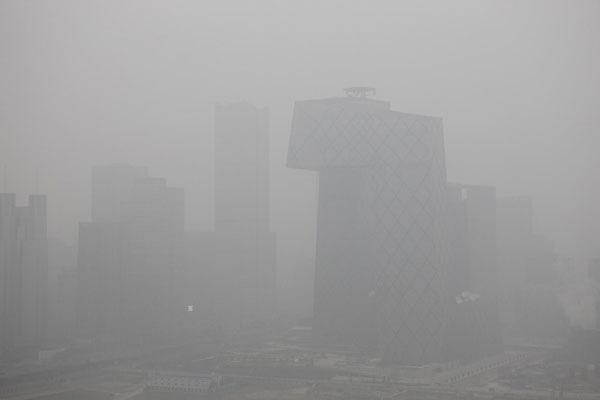
Is our destiny in our hands? Of course part of our future is up to us. This is something to keep in mind when, in the future, we could deal with tragedies, even (but hopefully not eventually) one the biggest tragedies of human history. Maldives and China can be just two examples of the self-determination of its own destiny. The archipelago of Maldives is extremely endangered by climate change. In case of ice melting, the ocean level will rise making of the country just a memory. In the recent past the former president Mohamed Nasheed called the global community to take concrete action in order to stop global warming and climate change, organising an underwater meeting of the college of ministers with the purpose of showing what can happen in case of ice melting. The highest altitude of Maldives is 2,4 meters on the level of the sea, and nearly 75% of the whole archipelago surface is at less than half a meter on the level of the sea. What about now? When Mohamed Nasheed performed his aquatic governmental meeting was 2009, now he is out of politics (he was imprisoned after a coup) and new rules apparently want to exploit the oil reserves of the country. As leaders of a sovereign country of course they can do it, but they have to take all the responsibilities for the future.
The same principles applies for China, where farms have been closed because of the incredibly high concentration level of polluting substances in the air. Nobody can force China to stop its industrialization, but of course nobody should be surprised if in the coming years breath diseases or cancer will raise. Our future depends (in part) on our choices, so when these are controversial be ready to accept the consequences. It is not just a question of cynicism, it is a matter of pragmatism. In other words, let's think before to not regret after. Unfortunately most of the contries of this world prefer give attention to the present rather than the future. That's a pity! Acting now is always possible, be in action in another moment not always is affordable.

Monday, 30 November 2015

EU-Turkey, can the union work?

In name of migrant crisis Europe  is ready to foster the relationship with a country whose identity is not clear at all

Opinion

Russia and Turkey are one against the other, Europe need both but chose the Turkish side. Of course in politics political choices are required and needed, but there are certain options better than others or, saying it in other terms, there are certain choices which are worse than other. Standing with Turkey in a moment of diplomatic crisis between Turkey and Russia means building up alliances of uncertain value. Russia is escalating pressure over Turkey, and Europe how will have to choose again. Until which point the can the EU leave Russia in the margin of the external agenda and playing against Russian interests? The EU needs Russia for stability in Middle East, as well as for fighting terrorism but bilateral ties have been already compromised by the Ukrainian crisis, and the Russian military aircraft shot down near the Syrian-Turkish border, with Europeans closer to Ankara, made the situation more complicated. Yesterday the extraordinary EU-Turkey summit on migration showed the EU took already its political decisions. «Re-energizing» the accession process is the principle recognised by everybody expect Cyprus, three billion Euro in commitments to help Turkey in managing refugees is another element of the European weakness. Europe simply can't deal with migrants, and is ready to pay Turkey to stop the flows giving money to a country considered to play a role in human smuggling. In addiction, Ankara of course is asking something in return. These requests are the EU membership («we feel Europeans and we want to be part of the European family», stated the Turkish prime minister Ahmetl Davutoglu), money (three billion Euros per year, not granted by the EU), silence on Kurdistan. The key element of the extraordinary EU-Turkey summit on migration is there is no consensus on anything. Germany is linking the negotiation process for the EU membership to Cyprus, Italy and the European Commission called Turkey to engage in a serious peace process with Kurdish community, and only a generic commitment in some money and speed up the accession process has been granted. Three billion Euros will be made available, but this is just in line of principle since no Country is putting cash.

Wednesday, 28 October 2015

Worrying times ahead Europe

Fear for migrants feeds nationalism all across the EU. Values and stability at stake


editorial

Fear is growing up, fear is dominating general feeling in Europe. The answer offered to the migrant crisis showed the whole continent scared by the huge amount of people coming from other parts of the world. We could say we are talking about people coming from the same Countries the western world (so the EU, as well) have always exploited, but it couldn't change anything. The political message coming from Poland is clear: there is more and more people against the admission policy for migrants tabled by the European Union, and there is no place for foreigners. Migrants have become too much, and Europe can't or don't want to help all these people. Most important, more and more Member States have fear. Polish population gave a clear mandate to decision makers. Granting an absolute majority to Jaroslaw Kaczyński and his far right party Law and Justice mean Poland has chosen a tougher path. Equality, respect and tolerance are all values at stake, and not only in Poland. Far right parties are rising up all across Europe, and national governments are acting building up fences, sending troops on the border, calling migrants to go away. Hungary, the Czech Republic, Slovakia are against any assistance. These countries basically are against everything different from national standards. Now Poland will join this group, while in France the xenophobic party Front National is strong as never happened in history of the Fifth Republic.

Wednesday, 8 July 2015

EU turned to a European Disunion

No mutual trust, no constructive spirit and egoism. What prerogatives to move forward?

opinion

Disappointment, disaffection, disregard. A European Disunion is what we have today. The plenary debate in Strasbourg was maybe the perfect image of the EU today. People complaining, accusing, blaming, screaming. Political groups fighting one against the other, MEPs hailing the Euro crisis in name of national autonomy, Spanish openly accusing «the arrogance of the German Government and the financial totalitarianism of banks». There is unbreathable air in Europe, with the tone of dialogue - whether it is possible to define it as dialogue - extremely deteriorated and just focus on holding against the partners what has been done during the past. There is no trust, and there is no constructive spirit. Without these prerogatives building bridges is totally impossible, dreaming cohesion even unthinkable. One of key messages coming from the European Parliament has been offered by Glenis Wilmots, a British member, and this sounds ironic considering the United Kingdom is reconsidering its EU membership and will hold a referendum on that. «Please, put your ego aside» are words which resound as a last desperate call for Europe. Nationalism and individualism are the tiny red line where the European governments lie. Looking at Europe in perspective, the only perspective possible can only be a strongest union, since today Europe appears to be on pieces. Rather than a European Union it is a European Disunion.

Saturday, 27 June 2015

Europe is at a turning point

The idea of the single project is far far away from the fathers of the EU. Nations are prevailing on the Union, and divisions are leading discussions

Opinion

Europe is at a turning point. Perhaps it is still not so close to a point of non return, but of course Europe is at turning point. In less than forty-eighy hours it has been shown the lack of unity of the European Union. Greece, migrations, and British membership were the three main items put on the table, and what happened? On Greece there was no deal, on migration there was no single answer to the problem. At last only referendum on a possible Brexit was discussed by leader. Well, honestly the British prime minister David Cameron just informed that the referendum will be hold in 2017 as foreseen, and it would be enough to understand where Europe is today. Member states reconsidering the single project is something doesn't sound good. Before leaving Brussels the Italian prime minister Matteo Renzi stated that an agreement on migration «is important for Italy, but is important above all for the idea of Europe». This is true, but the point today is a review process in under way. More than a single country is changing mind with regard of the EU project. Having to summarize the current EU in a slogan, we could say «no decisions, just divisions».