
Friday, 18 November 2016


No EU relevance makes Juncker frustrated
Anti-Trump statements explained by the lack of consideration for the European Union, which has not attribution in foreign affairs matters
 by Emanuele Bonini
What is there behind the "Juncker case"? Stress, mental sickness of any kind, rudeness? Frustration. The right explanation is frustration. The European Union has no foreign policy relevance, because it is foreseen it has not to have. Let's rewind the tape and start from the beginning. Commenting Donald Trump's victory in the US presidential elections, the president of the European Commission, Jean-Claude Juncker, said that with the next occupant of the White House «we'll waste time for two years while Mr. Trump tours a world that he is completely unaware of». There is a motivation for such a statement. Immediately after Juncker sent a letter to the president elected to congratulate with him and to invite him to Brussels. As fas as everybody knows that letter never got an answer. Considering the European Commission is constantly under the attack of the EU Member States, it appears clear the sense of frustration of the Commission's chief. Juncker and the body he is responsible for, got little consideration at home and none abroad.
Having said that, there is the possibility Mr. Trump knows really well the world. The impression is he's aware that in foreign policy the EU never existed. By treaties the foreign affairs are competence of the Member States. When it comes to set strategies and take decisions, national governments are the true plenipotentiary players. Showing a pragmatic approach and a clear sense of realpolitik, it is undeniable that the fist thing to do is to deal with single European leaders. The EU is not a priority because it simply can't be. Who does Federica Mogherini represent? The EU has an external action, but not a foreign affairs office. It is true that the EU is in charge of negotiating trade agreements, but Trump seems not to have the Transatlantic Trade and Investment Partnership (TTIP) in the list of his priorities. Juncker is the president of a body with limited powers. Until the European Union will have not attributions in foreign affairs policies, it can't surprise if leaders from the rest of the world will decide to bypass the EU. It is not a question of dividing Europe, it is just a question of the nature of the EU. And then, let's be honest: Europe has never been unite in foreign affairs.
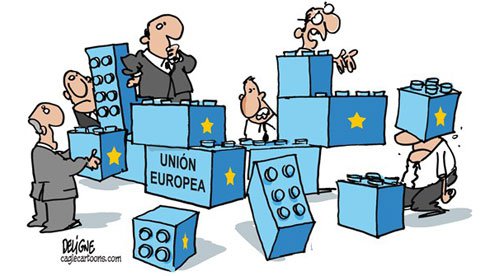
What is there behind the "Juncker case"? Stress, mental sickness of any kind, rudeness? Frustration. The right explanation is frustration. The European Union has no foreign policy relevance, because it is foreseen it has not to have. Let's rewind the tape and start from the beginning. Commenting Donald Trump's victory in the US presidential elections, the president of the European Commission, Jean-Claude Juncker, said that with the next occupant of the White House «we'll waste time for two years while Mr. Trump tours a world that he is completely unaware of». There is a motivation for such a statement. Immediately after Juncker sent a letter to the president elected to congratulate with him and to invite him to Brussels. As fas as everybody knows that letter never got an answer. Considering the European Commission is constantly under the attack of the EU Member States, it appears clear the sense of frustration of the Commission's chief. Juncker and the body he is responsible for, got little consideration at home and none abroad.
Having said that, there is the possibility Mr. Trump knows really well the world. The impression is he's aware that in foreign policy the EU never existed. By treaties the foreign affairs are competence of the Member States. When it comes to set strategies and take decisions, national governments are the true plenipotentiary players. Showing a pragmatic approach and a clear sense of realpolitik, it is undeniable that the fist thing to do is to deal with single European leaders. The EU is not a priority because it simply can't be. Who does Federica Mogherini represent? The EU has an external action, but not a foreign affairs office. It is true that the EU is in charge of negotiating trade agreements, but Trump seems not to have the Transatlantic Trade and Investment Partnership (TTIP) in the list of his priorities. Juncker is the president of a body with limited powers. Until the European Union will have not attributions in foreign affairs policies, it can't surprise if leaders from the rest of the world will decide to bypass the EU. It is not a question of dividing Europe, it is just a question of the nature of the EU. And then, let's be honest: Europe has never been unite in foreign affairs.
Saturday, 12 November 2016
Quotes
«Globalization was mismanaged».
Carlo Calenda, Italian minister of Economic Development (Brussels, 11th of November, 2016)
Carlo Calenda, Italian minister of Economic Development (Brussels, 11th of November, 2016)
Friday, 11 November 2016
End of a dream
Anti-establishment players and populists swept away the myth of globalization, followed by a new season of nationalism
 Opinions
Where there hadn't to be limits, there are fences; where there had to be free trade, there is protectionism; and where there was supposed to be the global village, there are nation-States. Something went wrong. The model chosen, decided and in somehow imposed, has finished to don't work: instead of globalization there is nationalism. It can't be! How is that possible? That's exactly what millions of people in Europe and worldwide thought on June 23rd after Brexit, that's exactly what millions of people in Europe and worldwide thought immediately after having watched Donald Trump becoming the 45th president of the United States of America. Unbelievable, isn't it? Nobody was ready to believe Trump could do it, but he did. It can't be! How is that possible? The answer is simple: voters were called to choose between two opponents, and they made their choice. It is called democracy. Looking at what happened in the latest American elections, somebody - and even more than somebody - is considering democracy as an epic fail. Points of view, of course. It can be said that Democrats chose the wrong candidate, it can be said that Americans are out of mind, a lot of things can be said. Considerations, opinions, analysis, are all elements which have to take into account one thing: a model has collapsed.
It failed the idea that globalization without neither rules nor ethics could bring wealth and prosperity. On the contrary, wealth and prosperity have been transferred from a country to another, as well as people. Poorest countries saw their living conditions improving, while countries once with good economic and social standards saw the deterioration of the domestic tissue. In name of competitiveness social dumping was promoted, corporations were given carte blanche, the idea of a flexible labour market was translated in precarity. No more rights and less money. Finance did the rest. While millions Dollar cannot be created with strokes of a magic wand, they can be instantly burned on the stock markets. Unreal economy forgot the real world, where the survival instinct was the answer to all of that. Incredible choices produced unpredictable results. The rise of uncompromising and populist movements is nothing but the result of a system which has become no longer sustainable. Marine Le Pen, Beppe Grillo, Geert Wilders, they are all the expression of the general discontent. In time of uncertainty, economic crisis, weakness, they offered (well, they promised to do so) the alternative to the contemporary world. Asking for no Europe, no free trade agreements, no immigrants and no foreigners, isn't perhaps a clear call for putting an end to the globalisation? The one which was offered is a national recipe rather than global.

Where there hadn't to be limits, there are fences; where there had to be free trade, there is protectionism; and where there was supposed to be the global village, there are nation-States. Something went wrong. The model chosen, decided and in somehow imposed, has finished to don't work: instead of globalization there is nationalism. It can't be! How is that possible? That's exactly what millions of people in Europe and worldwide thought on June 23rd after Brexit, that's exactly what millions of people in Europe and worldwide thought immediately after having watched Donald Trump becoming the 45th president of the United States of America. Unbelievable, isn't it? Nobody was ready to believe Trump could do it, but he did. It can't be! How is that possible? The answer is simple: voters were called to choose between two opponents, and they made their choice. It is called democracy. Looking at what happened in the latest American elections, somebody - and even more than somebody - is considering democracy as an epic fail. Points of view, of course. It can be said that Democrats chose the wrong candidate, it can be said that Americans are out of mind, a lot of things can be said. Considerations, opinions, analysis, are all elements which have to take into account one thing: a model has collapsed.
It failed the idea that globalization without neither rules nor ethics could bring wealth and prosperity. On the contrary, wealth and prosperity have been transferred from a country to another, as well as people. Poorest countries saw their living conditions improving, while countries once with good economic and social standards saw the deterioration of the domestic tissue. In name of competitiveness social dumping was promoted, corporations were given carte blanche, the idea of a flexible labour market was translated in precarity. No more rights and less money. Finance did the rest. While millions Dollar cannot be created with strokes of a magic wand, they can be instantly burned on the stock markets. Unreal economy forgot the real world, where the survival instinct was the answer to all of that. Incredible choices produced unpredictable results. The rise of uncompromising and populist movements is nothing but the result of a system which has become no longer sustainable. Marine Le Pen, Beppe Grillo, Geert Wilders, they are all the expression of the general discontent. In time of uncertainty, economic crisis, weakness, they offered (well, they promised to do so) the alternative to the contemporary world. Asking for no Europe, no free trade agreements, no immigrants and no foreigners, isn't perhaps a clear call for putting an end to the globalisation? The one which was offered is a national recipe rather than global.
Wednesday, 9 November 2016

Monday, 7 November 2016
«Brain drain harms Italy's competitiveness»
The European Commission's warning in the 2016 report on Education
 by Emanuele Bonini
Italy should care of national high-skill workers, since the migration of professionally valid people risks to harshly hit the country in terms of loss of competitiveness, the European Commission warned today. In its 2016 edition of the Education and Training Monitor report, the EU body stressed that in Italy «transition from education to work is difficult, even for highly qualified people» and «this is causing a "brain drain"». National authorities have not to underestimate the impact of such a phenomenon, but it appears the country is not putting in place neither measures nor wider policies to address the matter. In other terms the Italian education system is a good one, but completely incapable of keeping those who are ready for the labour market.
Problem with no solutions
The number of Italian citizens with a tertiary education degree leaving the country has been rapidly increasing since 2010. «This has not been compensated by inflows of equally well qualified Italians returning to the country». This means governments couldn't react, and not only that. There is not only a lack of political action. As the European Commission observed, the increasing emigration reflects better job opportunities and conditions abroad. As underlined in the report, survey data show that compared with their peers working in Italy, young Italian graduates working abroad earn higher and more rapidly increasing salaries, work more frequently under open-ended contracts and consider their formal qualification more appropriate for their job. Furthermore, Italians with a doctoral degree working abroad report having both better job opportunities and significantly higher earnings. «This may explain why highly qualified Italian workers have very little inclination to return to their home country. The emigration of highly qualified Italian workers therefore does not qualify as "brain circulation"» (i.e. when people temporarily go abroad to study or work, but then go back to their home country).

Italy should care of national high-skill workers, since the migration of professionally valid people risks to harshly hit the country in terms of loss of competitiveness, the European Commission warned today. In its 2016 edition of the Education and Training Monitor report, the EU body stressed that in Italy «transition from education to work is difficult, even for highly qualified people» and «this is causing a "brain drain"». National authorities have not to underestimate the impact of such a phenomenon, but it appears the country is not putting in place neither measures nor wider policies to address the matter. In other terms the Italian education system is a good one, but completely incapable of keeping those who are ready for the labour market.
Problem with no solutions
The number of Italian citizens with a tertiary education degree leaving the country has been rapidly increasing since 2010. «This has not been compensated by inflows of equally well qualified Italians returning to the country». This means governments couldn't react, and not only that. There is not only a lack of political action. As the European Commission observed, the increasing emigration reflects better job opportunities and conditions abroad. As underlined in the report, survey data show that compared with their peers working in Italy, young Italian graduates working abroad earn higher and more rapidly increasing salaries, work more frequently under open-ended contracts and consider their formal qualification more appropriate for their job. Furthermore, Italians with a doctoral degree working abroad report having both better job opportunities and significantly higher earnings. «This may explain why highly qualified Italian workers have very little inclination to return to their home country. The emigration of highly qualified Italian workers therefore does not qualify as "brain circulation"» (i.e. when people temporarily go abroad to study or work, but then go back to their home country).

Thursday, 3 November 2016
Migrants, refugees, asylum seekers: who they are
Differences between people moving from their place to another
 by Emanuele Bonini
Migrants are not all the same. When it comes to migration flows, words and definitions need to be accurate, because a refugee is not an asylum seekers and not all migrants are refugees. Sometimes these people are mixed up, but generalizations or inaccuracies are not allowed, as depending on the category of persons their legal status changes as well as their legal treatment. This is right the way national governments focus their attention on migration and their decisions on accepting foreign people. Here's a distinctions of categories, realized after a little reworking of the one realized by Amnesty International.
- Refugee. A refugee is a person who has fled from their own country because they have a well-founded fear of persecution and their government cannot or will not protect them. Under international law, being a refugee is a fact-based status, and arises before the official, legal grant of asylum. Asylum procedures are designed to determine whether someone meets the legal definition of a refugee. When a country recognizes someone as a refugee, it gives them international protection as a substitute for the protection of their country of origin. Refugee is generally a person with a legal status of protection recognised by governments, and he is entitled to remain in the country.
- Asylum seeker. An asylum-seeker is someone who has left their country seeking protection but has yet to be recognized as a refugee. Not all the asylum-seekers are refugees, but they all are entitled to stay temporarily in another country until their requests are not assessed. During the time that their asylum claim is being examined, the asylum-seeker must not be forced to return to their country of origin.

Migrants are not all the same. When it comes to migration flows, words and definitions need to be accurate, because a refugee is not an asylum seekers and not all migrants are refugees. Sometimes these people are mixed up, but generalizations or inaccuracies are not allowed, as depending on the category of persons their legal status changes as well as their legal treatment. This is right the way national governments focus their attention on migration and their decisions on accepting foreign people. Here's a distinctions of categories, realized after a little reworking of the one realized by Amnesty International.
- Refugee. A refugee is a person who has fled from their own country because they have a well-founded fear of persecution and their government cannot or will not protect them. Under international law, being a refugee is a fact-based status, and arises before the official, legal grant of asylum. Asylum procedures are designed to determine whether someone meets the legal definition of a refugee. When a country recognizes someone as a refugee, it gives them international protection as a substitute for the protection of their country of origin. Refugee is generally a person with a legal status of protection recognised by governments, and he is entitled to remain in the country.
- Asylum seeker. An asylum-seeker is someone who has left their country seeking protection but has yet to be recognized as a refugee. Not all the asylum-seekers are refugees, but they all are entitled to stay temporarily in another country until their requests are not assessed. During the time that their asylum claim is being examined, the asylum-seeker must not be forced to return to their country of origin.
Wednesday, 2 November 2016

Europe in economic troubles with migrants
Not enough in the EU budget to deal with the current crisis. Adding money not an easy task
 by Emanuele Bonini
Migration is not only a matter of political approach and will, it is also a matter of money. Despite the different political ideas, the European Union need resources which are not there. The EU in the sense of the Member States should revise the common budget in order to put new, fresh money with the aim of better addressing a situation otherwise impossible to solve. This is the only way out, and of course it is not an easy one. Far-right populist movements are rising up all across Europe, the European Union opted for strict fiscal rules, and amongst the governments there are those who neither can't nor don't want to invest on migration. There is still the possibility of changing the current Multi-annual Financial Framework (MFF), the single EU budget for the 2014-2020 period, but it is unclear how such a possibility will be used by the Member States.
Resources made available
The EU can spend for migration €9,26 billion, which are the resources foreseen in the heading 3 («Security and Citizenship»). These money are mainly channelled through the Asylum, Migration and Integration Fund (AMIF, €3,1 billion), the Internal Security Fund (ISF, €3,8 billion) and the main EU Home Affairs agencies involved (Frontex, Easo, Europol, that got €2,36 billion). In addition, under humanitarian aid and development cooperation, the EU budget and EU Trust Funds, as well as, outside the EU budget, the European Development Fund (EDF), address migration and asylum both geographically and thematically. As a new element at the end of 2015, the €3 billion Refugee Facility for Turkey was set up under the EU-Turkey deal on migration, with €1 billion coming from the EU budget.

Migration is not only a matter of political approach and will, it is also a matter of money. Despite the different political ideas, the European Union need resources which are not there. The EU in the sense of the Member States should revise the common budget in order to put new, fresh money with the aim of better addressing a situation otherwise impossible to solve. This is the only way out, and of course it is not an easy one. Far-right populist movements are rising up all across Europe, the European Union opted for strict fiscal rules, and amongst the governments there are those who neither can't nor don't want to invest on migration. There is still the possibility of changing the current Multi-annual Financial Framework (MFF), the single EU budget for the 2014-2020 period, but it is unclear how such a possibility will be used by the Member States.
Resources made available
The EU can spend for migration €9,26 billion, which are the resources foreseen in the heading 3 («Security and Citizenship»). These money are mainly channelled through the Asylum, Migration and Integration Fund (AMIF, €3,1 billion), the Internal Security Fund (ISF, €3,8 billion) and the main EU Home Affairs agencies involved (Frontex, Easo, Europol, that got €2,36 billion). In addition, under humanitarian aid and development cooperation, the EU budget and EU Trust Funds, as well as, outside the EU budget, the European Development Fund (EDF), address migration and asylum both geographically and thematically. As a new element at the end of 2015, the €3 billion Refugee Facility for Turkey was set up under the EU-Turkey deal on migration, with €1 billion coming from the EU budget.
Subscribe to:
Posts (Atom)