Wednesday, 29 January 2014

Italy still vulnerable, warned Barroso

«It has been made a lot, but marathon has not finished yet»

Josè Manuel Barroso
by Emiliano Biaggio

Crisis is not over in Italy, warned today the president of the European Commission, Josè Manuel Barroso, after his meeting with the Italian prime minister Enrico Letta. «Italy made enormous efforts, but the key challenge still remains», Barroso told reporters during the press conference. «Public debt remains high, and this makes Italy vulnerable». In other words, the Italian economic situation «is still fragile», because public debt «is an obstacle for the future of the country». For this reason Italy «need solid public finance and structural reforms». The president of the European Commission does believe Letta is working in appropriate way, as remarked in Brussels. «The announcements made by the Italian government on spending review and liberalizations are very important for the path of job and growth», said Barroso, clarifying Italy is called for the full implementation of the measures necessary for economic recovery and stability. «Now in Italy the situation is much better than the previous years, but marathon is not finished yet: we have to cover the last mile otherwise we risk to undermine the confidence». Finally Barroso called for political stability. «I hope there will be a stable majority in this government».

Sunday, 26 January 2014

Switzerland has a new hero: Wawrinka

The 28 years old tennis player beat the Spanish Rafa Nadal and became the second Swiss Grand slam winner ever

Wawrinka and the Australia Open cup
by Emiliano Biaggio

Tennis player Stanislas Wawrinka got an historic victory in Melbourne defeating Rafa Nadal in the Australian Open final. Wawrinka won the match in three sets, winning a Grand Slam trophy for the first time in his career and becoming the second Swiss player to reach such a result. Thanks to this victory, Wawrinka gained the third position in the world ATP ranking, overtaking his compatriot Roger Federer, the record 17-time men’s champion, one of the best player in the history of this sport (there are who considered the best player ever). Before today, only Federer was able to bring Switzerland on the top of world tennis. Wawrinka broke up with the tradition, becoming the first Swiss man since 2001 to be ranked higher than 32-year-old Federer. Furthermore, Wawrinka changed the course of Melbourne tournament beating who was considered the favourite one: Nadal has been seen as the winner after all the after top ranked player were out, but Wawrinka has been able to overturn that forecast. He played a perfect game, using a right mix of skill, determination and self-control. His opponent, on the contrary, experienced a defeat influenced by lack of concentration and complaints: Nadal made too much mistakes and for a while he had event to stop for the backache. Nadal didn't look for any excuse, and recognised the great performance of the winner. «Wawrinka was playing amazing», said Nadal at the end of the match. «It is very tough to stop him when he’s playing that way». The new champion is supposed to need more time to better realize what he did. The Swiss showed his incredulity. «It’s quite crazy what’s happening right now. I never expect to win a Grand Slam. I never dreamt about that because for me, I was not good enough to beat those guys». Well, since today Wawrinka can consider himself as one of the best players ever, and - who knows? - perhaps Roger Fededer's heir. «Roger called me», Wawrinka revealed.

Saturday, 25 January 2014

bLOGBOOK

Qu'il soit "à vendre" ou "à remettre" il ne fait pas aucune difference: les magasins ferment. C'est la crise. Elle est là, ècrite sur les avis qui se repetent en grande quantité et avec une fréquence croissante. C'est la crise, et elle se répand aussi à Bruxelles, la capitale de l'Union européenne, la plus riche de la Belgique. Parfois on peut lire "liquidation totale", mais le sens du message ne change pas: tout va finir. Il n'est pas possible savoir si la situation paraît grave aussi à tous les autres, si le personnes aient conscience de ce qui se passe. Il est temps des soldes, et elles sont attirées par les vitrines. Mais c'est normal: en saison des sold on regarde les marchandises, et pas les avis. A' la fin, quand le period meilleur de l'anné aura terminé, alors, peut-être, les bruoxelois pourrons comprendre quelle est la situation. Peut-être. Parce-que quand la saison des soldes tombe, commence celle où on fait de l'ètalage de toilettes...

Thursday, 23 January 2014

https://sorry.


How to apologise in the 2.0 century. European Commission offered a nice, polite and curious way to offer public excuses for technical problem at the audiovisual service "posting" them in the URL address of the page page. As shown by the picture realised thanks to a screenshot, there was a problem with the broadcasting. It has been announced on the main page, and the announcement has been made in all the official languages of the European Union. On the top, in URL space, is possible to read the "sorry.ec.europa.eu". A very impressive way to say, "sorry for the incovenience". Despite problems, in Brussels there's a great politeness. Just click on the image to have a look!

Wednesday, 22 January 2014

EU to take actions against Ukraine

The announcement came after the victims in Kiev riots

Protesters in Kiev
by Emiliano Biaggio

European Union is ready to reconsider its political relationships with Ukraine and to take actions against the former soviet republic, warned the president of the EU Commission, Josè Manuel Barroso. After the death of five protesters in Kiev, Europe decided to react. In Brussels Barroso was expected to present the new package for climate and energy, but he started his press conference with an announcement on Ukraine, with great surprise of the public. «We are shocked to hear the latest news from Ukraine about deaths of protesters, and express our deepest condolences to their families». But, added Barroso, «We are genuinely concerned about where these developments are taking Ukraine and will continue following closely these developments, as well as assessing possible actions by the EU and consequences for our relations». There are different options on the table, but for the president of the EU Commission «it's too early to disclose them». Barroso only suggested there is not only the refusal of negotiating the Stabilisation and association agreement, first and compulsory step for the EU access process. Thus he reiterated the will of take actions against Ukrainian authorities. «If in the Country the the fundamental rights will not be respected, the protection of the citizens will be not guaranteed and if the violations of human rights will continue, then EU Commission has not other choice but reconsider the relationship with the country». A decision will be eventually taken in case of lack of progress. «The overall environment - added Barroso - has been worsening for some time, and I would like to explicitly underline the fundamental responsibility of the Ukrainian authorities to now take action to de-escalate this crisis, and in particular the need for them to engage in a genuine dialogue with the opposition and with civil society on the ways to overcome this deep crisis». Otherwise Europe is ready to close the door to EU access.
In Ukraine protests raised after the decision of the government to don't sign the Stabilisation and association agreement, necessary to join the EU. The decision was taken because of Russia, which exerted huge pressure on Kiev offering economic benefit (especially in the energy sector) seen as an interference in both European and Ukrainian affairs. Large part of civil society started demonstrations against Viktor Yanukovych and his government, demonstrations repressed by the use of the force.

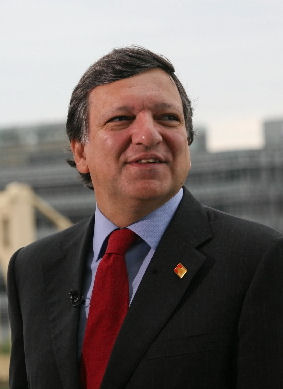
Rehn to become new High Representative?

He accepted to don't run for the presidency of the Commission if nomitaded official candidate for «economic affair or foreign policy»

Olli Rehn
by Emiliano Biaggio

EU commissioner in charge for Economic affairs, Olli Rehn, will not run for the presidency of the Commission in the next European election. The announcement came from Alde Party, Rehn's European political group. An internal agreement has been reached between the two candidates, Rehn and Guy Verhofstadt. The latter will be the official candidate to try to replace Josè Manuel Barroso at the head of the Berlaymont building, and Rehn - in case of victory - «will be party's candidate for one of the other senior posts in the EU, in particular in the field of economic affairs and foreign policy», it was specified by Alde officials. Before becoming responsible for Economic and monetary affairs Rehn served as EU commissioner for the Enlargement. Analysts said Rehn decided to continue to be the responsible for Financial affairs or, in alternative, came back to his previous post. But there is a third possibility: since the expression used by Alde officials is generic, maybe Rehn is thinking to replace Catherine Ashton as High representative of the Union for Foreign Affairs and Security Policy (known also as HR). It is clearly a «foreign policy» post as described as well as «one of the other senior post of the Ue». Perhaps does Rehn wonder to became the "foreign minister" of the European Union? Rumours started to circulate in Brussels, and clarifications still didn't arrive.

Sunday, 19 January 2014

From U.S. no great changes in spying activity

After the espionage case Barack Obama finally announced a new regime for the intelligence. Just a light revision is expected

by Emiliano Biaggio

U.S. president Barack Obama announced on Friday partial restrictions on NSA surveillance activity after the spy story blamed by Europe. It's the first time the head of the White House talks about the electronic surveillance conducted by the National Security Agency over European leaders. Obama had the delicate task of assuring commitment in the fight of terrorism on one hand, and in preserving privacy on the other one. For him the main problem was to find a diplomatic and national solution: there not only to regain the international credibility but also to guarantee the internal goals. Obama's announcement was not a revolutionary one: he just promised that the United States will not eavesdrop on the heads of state or government of close U.S. friends and allies. It means that this new policy would apply to dozens of leaders, explained a senior administration official. Nothing is going to change, in substance. As remarked into the presidential policy directive issued the 17th of January, «the collection of signals intelligence is necessary for the United States to advance its national security and foreign policy interests and to protect its citizens and the citizens of its allies and partners from harm». Surveillance will go on. It's a question of national security, and of tradition too. «The United States, like other nations, has gathered intelligence throughout its history». What is going to change, as said, is the "protection" of certain head of State and head of governments. «The leaders of our close friends and allies deserve to know that if I want to learn what they think about an issue, I will pick up the phone and call them, rather than turning to surveillance», said Obama.
   Furthermore, the so called "metadata" programme will be ended as it currently exists. "Metadata" is a lists of million of phone calls made by Americans that show which numbers were called and when. It's managed by the federal government, but Obama proposed to give to third parties - such as telephone companies - the management of all these informations after a legislative review of the subject. «The United States is not spying on ordinary people who don’t threaten our national security», wanted to assure president Obama. Some work started and will remain in progress for some time, but forget about closing the NSA or ending the surveillance activities. The problem is not what to do, but only how to do it.

Thursday, 16 January 2014

EU to suspend part of sanctions on Iran

A decision could be taken already next Monday

by Emiliano Biaggio

The minister for Foreign affairs of the EU countries could lighten the economic embargo in Iran if the Islamic Republic gives prove of respecting the international agreements on the nuclear programme, officials said today in Brussels. On Monday the Foreign affairs council meeting will discuss the Iranian dossier, and if the International Atomic Energy Agency report will provide a positive outcome the European Union is ready to temporary suspend part of the sanctions in force.
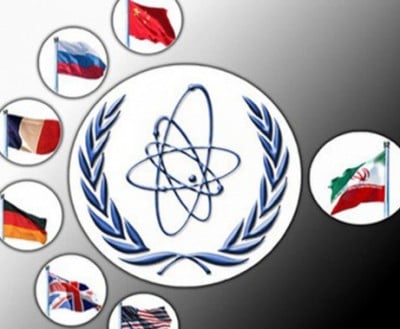
At the end of November the so called "3+3" group (United States, Russia, China plus the three EU countries Germany, France and United Kingdom) reached an agreement with Iran by which the international community is ready to gradually remove the economic restriction if the Iranian authorities accept to halt enrichment of uranium above 5% purity, and "neutralise" its stockpile of near-20%-enriched uranium. In Brussels they wait for the Iaea report on Monday at noon: if the experts of the Agency will say in Teheran the plan is proceeding as scheduled, in return EU is ready to suspend for six months sanctions on trade in gold and precious metals, on Iran's automotive sector, and its petrochemical exports.


THE MAIN POINTS OF THE INTERNATIONAL AGREEMENT

Iran will:
- Halt enrichment of uranium above 5% purity;
- "Neutralise" its stockpile of near-20%-enriched uranium;
- Not install any more centrifuges (the machines used to enrich uranium).

In return the international community will:
- Not impose further nuclear-related sanction;

- Suspend certain sanctions on trade;
- Transfer $4.2 billion (€3,9billion) to Iran in instalments from sales of its oil.