Monday, 15 June 2015

Pressmen, chapter 6

Star System

In Hollywood rules the so called "star system". Basically, a person can have the chance to count only if present. If you're not there you don't exist: that's what the star system is about. But there is no need to travel to Hollywood in order to find a star system. Any press card is sufficient to live like in Hollywood. Journalist means star, no way. Any journalist lives to become a super-star. Any journalist wants to be the king of this star system. So pressmen basically are everywhere, because this is the only way they have to be. Of course they simply are, according to the press world commandments. Anyway, put into the star system pressmen have to appear. It doesn't matter how, the only thing that really counts is to appear. There are several methods to live the star system: one of the most popular is giving the impression to be in a place without being. In this case pressmen work comfortably at their own office in their home town, writing as they are somewhere else. For example, when a journalist in Rome has to write about a F1 race which took place in Prague, at the beginning of his article he will write «Prague, 13 March...». Rules and professionals ethics would require the journalist to write the name of the city where he is, but rules and professional ethics are for beginners. Once a man gets a press card he becomes a journalist. And journalists have no ethics and, above all, are gods. Thus, they can modify rules at any times. Using the name of the city for their articles, journalists can show the world to be correspondent, to travel, to be real scoop-hunters. They basically can demonstrate to be there, in full compliance with the star system basic rule: if you're not there you don't exist. Even if it is totally untrue, pressmen are everywhere and in this way they exist.

Sunday, 14 June 2015

Corporate tax, new action plan with old strategy

The latest EU package for a fairer system will re-launch a project from 2011

by Emanuele Bonini

CCCTB, let's try again. On Wednesday the European Commission will adopt Action Plan to make corporate taxation fairer, more efficient and more transparent in the EU. Despite the purposes behind this proposal, the main fact is the European Commission is re-proposing something at least five years old. In fact, as they perfectly know in Brussels, the project for a Common Consolidated Corporate Tax Base (CCCTB), was launched already in March 2011. Making a comparison we have nothing but a «re-launch» of the ancient proposal, as admitted by the same European Commission. But what is the Common Consolidated Corporate Tax Base (CCCTB)? It is a single set of rules that companies operating within the EU could use to calculate their taxable profits. In other words, a company or qualifying group of companies would have to comply with just one EU system for computing its taxable income, rather than different rules in each Member State in which they operate. The 16th of March, 2011, the European Commission proposed to the Member States to introduce the CCCTB. In that occasion the idea was to set a common system for calculating the tax base of businesses operating in the EU, although the CCCTB was not compulsory. On the contrary, it was foreseen that the CCCTB could be optional for companies.

Thursday, 11 June 2015

FACT SHEET/ The carbon Cycle


Image source: The carbon cycle, NASA Earth observatory

The most important GHG is carbon dioxide (CO2), which persists in the atmosphere for thousands of years. Other important GHGs are methane (CH4), nitrous oxide (N2O) and fluorinated gases. CO2 has the largest impact on climate change. In 2014, the average atmospheric concentration of CO2 was almost 400 parts per million (ppm), up from 280 ppm in pre-industrial times.
   The carbon cycle is the flow of carbon through the earth's systems. Carbon is released by plants, soils and oceans, and taken up by plants and oceans, and over very long time periods (thousands of years) also by rocks. A CO2 molecule, made up of one carbon atom and two oxygen atoms, is created when carbon reacts with oxygen, for example in the burning of wood or when humans and animals breathe. CO2 is destroyed when the carbon is separated from the oxygen, for example by plants through photosynthesis.
   Human activities lead to additional releases of carbon, from the burning of fossil fuels, deforestation and land use change, as well as cement production. About half of this additional carbon is taken up by plants and oceans, while the rest remains in the atmosphere as CO2. However, the take-up of CO2 in plants and oceans appears to be slowing down, as these carbon stores become saturated. Carbon dioxide removal would involve modifications of elements of the carbon cycle to enhance the uptake and storage of CO2 in biomass, soils, oceans and geological formations

Wednesday, 10 June 2015

Is Russia a friend? The European debate is open

In Strasbourg the EU Parliament called on a review of bilateral ties, while in Brussels there was who preferred share other ideas. Completely different

by Emanuele Bonini

Russia is no longer a strategic partner of the EU. Or maybe it is. That's the dilemma that is dividing Europe, as usual happens in case of hot dossier. It could be said that without division a dossier wouldn't be hot, and this true. But apparently the leopard can not change its spots, thus once again the EU is acting under the "business as usual scenario", that one of different voices. Basically what happened basically was the vote of the European Parliament on Russia, immediately disavowed by the member States. We talk about Italy, to be precise. In Strasbourg MEPs passed a resolution (494 votes to 135, with 69 abstentions) condemning Russia for «deliberate violation of democratic principles, fundamental values and international law with its violent action and destabilisation of its neighbours». Any reference to Ukraine is not entirely fictional, in fact MEP Gabrielius Landsbergis (EPP), rapporteur of the resolution, had no problem to say «with its aggression against Ukraine and annexation of Crimea, the Russian leadership has put our relations at a crossroads». Somebody could define all this "state of play", somebody else "diplomacy". Anyway, with its vote the European Parliament called the EU «critically re-assess its relations with Russia», which means the EU «must devise a soft-power contingency plan to counter Russia’s aggressive and divisive policies». Meanwhile in Brussels the Italian minister for Foreign affairs, Paolo Gentiloni, clearly stated that in Italy opinion «there is the need to look at the future», which means «a framework of ties with Russia has to be re-established because the country is strategic for Europe».

Tuesday, 9 June 2015

Maia

Oops, I did it again. I wanted to come back being an author, so I wrote Maia. It wasn't my intention, to be honest. But, you know how it works: once the inspiration comes, so does the story. And here we have Maia, something new, something different. How new and how different? Well, I leave the audience answer these questions by clicking here or on the right side of this blog. I can only say Maia marks an historical moment, being the first work in another language. So, enjoy. As usual, Maia is in "my books" section.

Wednesday, 27 May 2015

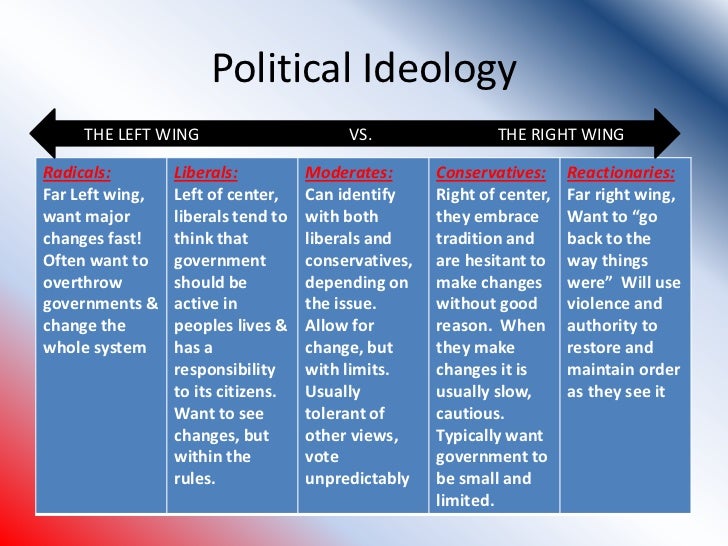
Far Left parties put EPP at stake

Intense internal debate to understand how to deal with the new emerging political forces, with S&D at the window ready to change alliances. What future for the traditional European right-wing political class?

(click to enlarge)
by Emanuele Bonini

European right is concerned about the rise of the far left parties all across the Old Continent. Syriza in Greece first, then Podemos in Spain. Political balance is changing in Europe, and with it also the political agenda can change. The future of Europe is at stake, and that is something in Brussels know very well. It is not a case if EPP members held «an intense internal debate» on the outcome of recent elections in Spain and Poland. The untold truth is the European Popular Party starts to consider itself in danger.
   EPP officials stressed that MEPs fear the allies from the left. Socialists & Democrats are now in coalition with EPP, granting the majority into the Parliament. But - that is what EPP MEPs are worried about - S&D could look to the far left parties with sympathy, searching for understanding on different files. That would mean the end of the EPP leadership, and here we have what politicians from the right don't want to officially admit. «It has to be clear that Podemos as well as Syriza represent a challenge for everybody», people say from EPP, showing all the anxiety animating the main European party.
  The truth is people from the traditional right are afraid of being overthrown by all the other parties. In some how, the EPP members see the national elections all across Europe as a test against the actual political class. EPP has been criticized for the austerity measures, has been considered as the main responsible for the social crisis in Greece. After the European election of May 2014, EPP has obliged to abandon the severity which has characterized last years, opening to the flexibility so desired by the left. Such a change was a political defeat for the European right, since flexibility was an unavoidable concession in order to maintain the leadership in the plenary. The European Popular Party has the problem to still be the first party in Europe in a very weak condition.

Tuesday, 26 May 2015

Hungary defies Europe with ethical relativism

Prime minister Viktor Orban is criticising the single model using the doctrine according to which nothing is universal and, so, unchangeable

(click to enlarge)
Opinion

Everything is possible, because laws are written by men and men can always reconsider the principle behind any law. Hungarian prime minister Viktor Orban's theory could finish to enlarge the gap between his country and international partners. Orban went to Strasbourg during last plenary session of the European Parliament to have an exchange of views to MEPs, who quizzed the head of government on the Hungarian internal affairs. Orban's extreme-right positions don't like in Europe, especially that one in favour of the death penalty. There Orban unveiled his plans, saying he wants Europe to rethink its legal framework. «I asked a question. I asked whether the death penalty could an instrument good to see law respected and safe life», said Orban. «We are not talking about revenge, we are talking about a proportionate punishment to the committed crime». Preliminary reactions to these words are very superficial. It seems Orban wants an eye for an eye regime, a law of retaliation as a basic principle for the society. The truth is the Hungarian prime minister goes beyond all that through a vision of ethical relativism, by which there are no universal, permanent criteria to determine what may be right or not. So, nothing is forever. We are in front of a hidden critic to the European system, always seen with a certain suspicion in the former Communist part of the EU. An opportunity, of course, but at the same time a reason to be nervous.

Quotes

«Growth is not a goal itself, growth is the question of how redistribute wealth».
Alexander de Croo, Belgian minister for Development cooperation (Brussels, 26th of May, 2015)

Thursday, 21 May 2015

MEPs not in favour of a Turkish membership

Despite optimism by the EU Commission, the Parliament is not ready to step up negotiations

by Emanuele Bonini

Europe can wait. Despite optimism showed by some member of the European Commission, Turkey is not a country considered to get EU membership. Listening to the debate in the European Parliament allowed to better understand how sensible is this file, with the majority of the political groups against the idea of a Turkish access. EPP, ECR, EFDD and NI don't believe Ankara deserves to see new negotiating chapters opened, with a part of the ALDE sceptic too, for the non-existing progress on the path of the European basic values. The Euro-Asiatic country is not evolving in the sense of the Copenhagen criteria, which set the conditions for EU membership. Only Greens and part of the European left are in favour of incentives. They are sure this could help Turkey in make that changes required in order to became part of the single project. The problems is Turkey has not enough supporters in Strasbourg, so the plenary session decided to postpone the vote on Turkey's 2014 reform progress report. The point is at this stage progress are not seen by anybody, or just by few MEPs, thus there is nothing but the political message sent to the Turkish government: it's necessary «to accelerate the pace of accession negotiations and to commit unequivocally to respect democratic values and principles, which are at the heart of the European Union».
   It has to be said that Recep Tayyip Erdogan is helping the European institutions to form its position, since the current Turkish government seems to have lost its appetite for EU-related reforms. The point is another. With the European Council divided and not unanimously ready to welcome Turkey (Austria, Germany, France, Cyprus and Greece are not in favour), a European Parliament critic or skeptic doesn't help the dialogue. With two EU institutions out of three, only the European Commission can be optimistic. But it is alone.

Related articles

- EU Turkey membership process to step up

Monday, 18 May 2015

EU Turkey membership process to step up

A new negotiating chapter to be opened «very soon», according to commissioner Hahn

by Emanuele Bonini

The Turkish accession process to the EU could mark a small progress as the European Commission announced possible negotiations on economic issues, the so called chapter seventeen. «I do believe chapter seventeen can be opened very soon», said Johannes Hahn, EU commissioner for Neighbourhood Policy & Enlargement Negotiations. Talking at the end of the EU-Turkey association council meeting, Hahn clarified that «the progress report on Turkey will be submitted at the Council at the latest by the end of June», and in that occasion the EU member States will «hopefully» decide to open a new negotiating chapter. In Ankara they are waiting for that, as stressed by the Foreign minister of Turkey. «The ongoing dialogue can't replace the accession process», said Mevlüt Çavuşoğlu in Brussels. «Accession remains on our political agenda, and we remain committed on the reform process». Improvements are now expected, since «the country has been showing to be patient».
   Turkey opened the first negotiating chapter in 2005, and currently is negotiating on fourteen chapters. The entire accession process to the EU will be concluded only when all the thirty five negotiating chapters will be closed.


Related articles:

- Turkey still a cause of division for the EU

- FACT SHEET / EU-Turkey negotiations