Thursday, 10 March 2016
Wednesday, 9 March 2016
bLOGBOOK - Dream a little dream of her
She was there. In my dreams, of course. She was standing in front of the window, enjoying the sun light filtering through the curtains. She couldn't see me, having her back to me. But I had the impression she knew I was there in the room, right in that moment. Or maybe she only expected I was coming, as I expected to find the person I was looking for. But the person I was searching was not her, and she was there. I couldn't be mistaken, and I wasn't. I recognised immediately her figure. I moved only a few step forward, without saying anything. The soft carpet down on the floor made no possible to produce footsteps, but she perceived my presence and she turned around. She was exactly as I could remember, maybe even beautiful. She was dressed in beige, encased in a nice, simple but elegant suit of the kind she used to wear. She was holding a cat in her arms, caressing it gently as the pet was her own child.
«I told you I wanted one. Look how cute is this cat. Isn't it so cute?»
That was all she said. She didn't added anything, neither did I. She remained there silently, caressing the cat and showing proudly the animal. She didn't look at me. She had never done. I tried to see her moves, but nothing happened. She was immersed in thoughts as I was lost in dreams. I perfectly knew I was living in a dream, but in that moment I said myself not to awake. Sometimes love can be silent, and I was loving that silence. Then she turned around again, coming back to stand in front of the window enjoying the sun light filtering through the curtains with her cat in her arms. It was there, in that precise moment I realised nightmares can be terribly cruel because terribly sweet.
«Well», I said. «Unless you have anything to tell me, it's time to go. I have someone to look for».
I didn't get replies. She had her back to me, and I couldn't look in her eyes for a last time.
«So... Goodbye»
I entered in silence and I left in silence. That bright, white room, was perhaps the darkest experience of my imaginary universe. I still had no idea who I had to find, but I had to restart my research.
«I have to get someone», I repeated myself. That someone wasn't her.
«I told you I wanted one. Look how cute is this cat. Isn't it so cute?»
That was all she said. She didn't added anything, neither did I. She remained there silently, caressing the cat and showing proudly the animal. She didn't look at me. She had never done. I tried to see her moves, but nothing happened. She was immersed in thoughts as I was lost in dreams. I perfectly knew I was living in a dream, but in that moment I said myself not to awake. Sometimes love can be silent, and I was loving that silence. Then she turned around again, coming back to stand in front of the window enjoying the sun light filtering through the curtains with her cat in her arms. It was there, in that precise moment I realised nightmares can be terribly cruel because terribly sweet.
«Well», I said. «Unless you have anything to tell me, it's time to go. I have someone to look for».
I didn't get replies. She had her back to me, and I couldn't look in her eyes for a last time.
«So... Goodbye»
I entered in silence and I left in silence. That bright, white room, was perhaps the darkest experience of my imaginary universe. I still had no idea who I had to find, but I had to restart my research.
«I have to get someone», I repeated myself. That someone wasn't her.
A Slovakian drama over Europe
After general elections, the country is offering EU a rotating presidency with no pro-European attitude. Alternatives are no functioning governments or political crisis during the semester
by Emanuele Bonini
After Belgium will be the turn for Slovakia? Many people in Europe are looking at the eastern republic after the general elections that gave an unpredictable future not only to the country. Since the next rotating presidency of Council of the EU will be Slovak, what is going to happen in the country will hit the European agenda and Europe as a whole. The centre-left Social Democracy SMER, party of the outgoing Slovak prime minister Robert Fico, will be probably not in the position of forming a government due to a lack of clear majority in the Parliament and the rise of right-wing parties. SMER remained the first party in the country, but it could be not enough to rule the country itself. There is the risk of a national political impasse, which could affect the political activity at European level, where strong commitment and great coordination are required (and hoped, considering the hot dossier on the table) together with a pro-European spirit. This is something Slovakia will be never able to offer. Fico himself, a socialist, announced to appeal the European Court of Justice against the decision of a binding relocation mechanism of migrants, refusing any idea of quotas imposed by Brussels. Fico's next partners won't be more light in their political position, since the SMER leader could share the government with euroskeptics.
![]() |
| National Council seats allocation after Slovakia elections |
After Belgium will be the turn for Slovakia? Many people in Europe are looking at the eastern republic after the general elections that gave an unpredictable future not only to the country. Since the next rotating presidency of Council of the EU will be Slovak, what is going to happen in the country will hit the European agenda and Europe as a whole. The centre-left Social Democracy SMER, party of the outgoing Slovak prime minister Robert Fico, will be probably not in the position of forming a government due to a lack of clear majority in the Parliament and the rise of right-wing parties. SMER remained the first party in the country, but it could be not enough to rule the country itself. There is the risk of a national political impasse, which could affect the political activity at European level, where strong commitment and great coordination are required (and hoped, considering the hot dossier on the table) together with a pro-European spirit. This is something Slovakia will be never able to offer. Fico himself, a socialist, announced to appeal the European Court of Justice against the decision of a binding relocation mechanism of migrants, refusing any idea of quotas imposed by Brussels. Fico's next partners won't be more light in their political position, since the SMER leader could share the government with euroskeptics.
Wednesday, 2 March 2016
«Tax on car use rather than its possession»
Belgium at work to radically change the mobility culture with an ambitious plan
by Emanuele Bonini
The green revolution is ready. Belgian authorities are rethinking the national taxation policy, shifting taxes from car property to its use. It would be a legal way of imposing a carbon tax in order to reduce pollution and boost the public transport services provided by local administrations. Taxation per kilometres rather than road tax is the answer for the kingdom of Belgium according to the Federation of Enterprises in Belgium (FEB), the only multi-sector employer organisation representing companies in Belgium’s three region. There is «the need of taxing car use rather than its possession», FEB wrote in its plan for mobility. Together with a new taxation policy, the set of proposals asked for «the improvement of public transport». Furthermore, it is foreseen a special «budget for mobility». In practice it means employers will stop offering company cars but, on the contrary, they offer an amount of money to spend to move in and out the city leaving the employees the choice of the solution the consider as the best to travel. «It's time to act», stated the FEB chief executive officer, Pieter Timmermans. «The mobility problems affect our economy», he added. FEB estimated that only in Belgium every year 51 hours are wasted in traffic, with a total economic loss of nearly 9 billion Euro. Possible solutions have now been set and put on the table. It's to politics to decide about, but a the impression is Belgium is preparing a green revolution for a more sustainable transport system. We will see.
Ticket prices at crazy amounts in Champions League
More than half of seats available for the final match to be more expensive thant the previous year despite no inflation in Europe
by Emanuele Bonini
Despite the very low inflation rates in Europe, ticket prices for the UEFA Champions League final rose more than 10%. It can appears weird, especially looking at the latest figures, but it is not. In times of business there is no other rule but business. So, who care about football? Just those who can make money with it. The idea of sport was over when for the first time sponsors appeared on jerseys, and then that new idea finally prevailed making soccer nothing than an expression of capitalism. The richest ones win, the poorest ones go home. So Champions league became a competition only for few teams, although it was decided to go beyond the idea of Champions League to honour business. Having a competitions called Champions League with no champions doesn't make sense, but it makes money, a lot of money. At the end Real Madrid, FC Barcelona, Bayern Munich are the football teams always seriously accredited to be the final winners of the cup, of course because they have money to but all the best players on the market. Forget Nottingham Forest, don't imagine Aston Villa succeed again, unless Arabians start invest their petrodollars there. Of course, with the idea of a soccer not for fun, with the idea of a soccer not for all it is not a new having a very expensive ticket for the Champions League final scheduled the 28th of May. The most affordable ticket will cost 70€ per person, but here there are no changes compared to the previous year. The real difference is for the 56% of total tickets available and reserved for the highest category of price. Seats reservable at 280€ per person in 2015 will cost this year 320 € (+14,2%), while tickets sold last year at 390€ will cost this season 440€ (+12,22%). In any case prices are not affordable for everybody, but business is for those can make business. And soccer is business. Far from business, where soccer is still a popular sport in the sense of the term «popular», getting a ticket for a match can be very very cheap, only 1€ and even less. We talk about the Russian Football Premier League, a national competition providing local teams to the European Champions League.
by Emanuele Bonini
Despite the very low inflation rates in Europe, ticket prices for the UEFA Champions League final rose more than 10%. It can appears weird, especially looking at the latest figures, but it is not. In times of business there is no other rule but business. So, who care about football? Just those who can make money with it. The idea of sport was over when for the first time sponsors appeared on jerseys, and then that new idea finally prevailed making soccer nothing than an expression of capitalism. The richest ones win, the poorest ones go home. So Champions league became a competition only for few teams, although it was decided to go beyond the idea of Champions League to honour business. Having a competitions called Champions League with no champions doesn't make sense, but it makes money, a lot of money. At the end Real Madrid, FC Barcelona, Bayern Munich are the football teams always seriously accredited to be the final winners of the cup, of course because they have money to but all the best players on the market. Forget Nottingham Forest, don't imagine Aston Villa succeed again, unless Arabians start invest their petrodollars there. Of course, with the idea of a soccer not for fun, with the idea of a soccer not for all it is not a new having a very expensive ticket for the Champions League final scheduled the 28th of May. The most affordable ticket will cost 70€ per person, but here there are no changes compared to the previous year. The real difference is for the 56% of total tickets available and reserved for the highest category of price. Seats reservable at 280€ per person in 2015 will cost this year 320 € (+14,2%), while tickets sold last year at 390€ will cost this season 440€ (+12,22%). In any case prices are not affordable for everybody, but business is for those can make business. And soccer is business. Far from business, where soccer is still a popular sport in the sense of the term «popular», getting a ticket for a match can be very very cheap, only 1€ and even less. We talk about the Russian Football Premier League, a national competition providing local teams to the European Champions League.
Wednesday, 24 February 2016
EU working at Plan B in case of Brexit
Juncker said there was only one option, Mogherini confessed there is other on the table
by Emanuele Bonini
The European Commission is setting up the Plan B for the United Kingdom, in case the British people decide to leave the European Union voting for a Brexit. For the first time since the beginning of the British affair, the European Commission admitted that the EU is working to the "stay-out" scenario. «If the UK referendum takes a different decision of not staying in the EU, I would do all that I can to guarantee bilateral relations with the UK», said yesterday the High Representative of the European Union for Foreign Affairs and Security Policy, Federica Mogherini. She said MEPs of the committee on Foreign Affairs of the European Parliament that in case of a Brexit nothing has to be considered as granted, since a new relation «would be negotiated between the UK and the other 27 Member States». This is a clear admission of a change in Commission view. Still few days ago the president of the European Commission, Jean-Claude Juncker, stated that in Brussels «we don’t have a Plan B, we have a Plan A», making clear that the Plan A foresees Britain will stay in the European Union. Listening to Mogherini it appears clear a Plan B is there, with the EU institution already working on it.
by Emanuele Bonini
The European Commission is setting up the Plan B for the United Kingdom, in case the British people decide to leave the European Union voting for a Brexit. For the first time since the beginning of the British affair, the European Commission admitted that the EU is working to the "stay-out" scenario. «If the UK referendum takes a different decision of not staying in the EU, I would do all that I can to guarantee bilateral relations with the UK», said yesterday the High Representative of the European Union for Foreign Affairs and Security Policy, Federica Mogherini. She said MEPs of the committee on Foreign Affairs of the European Parliament that in case of a Brexit nothing has to be considered as granted, since a new relation «would be negotiated between the UK and the other 27 Member States». This is a clear admission of a change in Commission view. Still few days ago the president of the European Commission, Jean-Claude Juncker, stated that in Brussels «we don’t have a Plan B, we have a Plan A», making clear that the Plan A foresees Britain will stay in the European Union. Listening to Mogherini it appears clear a Plan B is there, with the EU institution already working on it.
Tuesday, 23 February 2016
EU asked Member States emergency plans on migration
Meanwhile the Council wrote a new paragraph to the draft regulation for the new Frontex: Greece and Italy will be isolated in case they fail in secure the European external borders
by Emanuele Bonini
Europe starts working on worst scenarios. Migration crisis is now more than a crisis, it is close to be a real emergency. In a joint statement issued today by the European Commission and the Dutch rotating presidency of the EU Council admitted to be «concerned about the developments along the Balkan route and the humanitarian crisis that might unfold in certain countries especially in Greece», calling on «all countries and actors along the route to prepare the necessary contingency planning to be able to address humanitarian needs, including reception capacities». The Dutch minister for Migration Klaas Dijkhoff and European Commissioner for Migration, Dimitris Avramopoulos, assured their joint determination to pursue a European approach to the refugee crisis, although Member State are already reintroducing border controls and are ready to isolate Greece in dealing with migrations.
The joint statement confirmed the worried status of the European Council, the EU institutions representing the 28 Member States. Diplomats admitted only few days before the joint statement that there is general concern over the development of the migration flows. «As far as we know at the moment the are not substantial changes in the routes», the diplomats said, but clearly the situation is felt as always more out of control. The Dutch presidency, until June the voice of the European governments, pushed the European Commission to do something, and the results are the emergency measures. «In parallel» with the national contingency plans asked to the Member States, «the Commission is coordinating a contingency planning effort, to offer support in case of a humanitarian crisis both outside and within the EU, as well as to further coordinate border management», said Commissioner Avramopoulos. Europe is basically preparing for the worst, considering there is no way out and no hope to invert the flows. EU officials explained that the number of migrants and refugee already arrived in the EU is too high, and is no higher only because of adverse atmospheric conditions. «To stem the flows» of incoming people is the main goal, and with no trend inversion Member States are acting to close their borders.
by Emanuele Bonini
Europe starts working on worst scenarios. Migration crisis is now more than a crisis, it is close to be a real emergency. In a joint statement issued today by the European Commission and the Dutch rotating presidency of the EU Council admitted to be «concerned about the developments along the Balkan route and the humanitarian crisis that might unfold in certain countries especially in Greece», calling on «all countries and actors along the route to prepare the necessary contingency planning to be able to address humanitarian needs, including reception capacities». The Dutch minister for Migration Klaas Dijkhoff and European Commissioner for Migration, Dimitris Avramopoulos, assured their joint determination to pursue a European approach to the refugee crisis, although Member State are already reintroducing border controls and are ready to isolate Greece in dealing with migrations.
The joint statement confirmed the worried status of the European Council, the EU institutions representing the 28 Member States. Diplomats admitted only few days before the joint statement that there is general concern over the development of the migration flows. «As far as we know at the moment the are not substantial changes in the routes», the diplomats said, but clearly the situation is felt as always more out of control. The Dutch presidency, until June the voice of the European governments, pushed the European Commission to do something, and the results are the emergency measures. «In parallel» with the national contingency plans asked to the Member States, «the Commission is coordinating a contingency planning effort, to offer support in case of a humanitarian crisis both outside and within the EU, as well as to further coordinate border management», said Commissioner Avramopoulos. Europe is basically preparing for the worst, considering there is no way out and no hope to invert the flows. EU officials explained that the number of migrants and refugee already arrived in the EU is too high, and is no higher only because of adverse atmospheric conditions. «To stem the flows» of incoming people is the main goal, and with no trend inversion Member States are acting to close their borders.
Thursday, 18 February 2016
Europe to lose anyway in front of British issue
To be smashed by sceptics or to lose political power. For the EU there is no emergency exit, but only lose-lose formula
by Emanuele Bonini
Whatever will happen Europe can't win its game. Blocked in the grip of Eurosceptics and anti-integration forces, the European Union can't do nothing but survive. The choice of accept the UK requests is therefore the lesser evil, which is not good by definition. One of the conditions put on the table by prime minister David Cameron is the possibility to avoid further integration. This is the end of any wish for all those who have been asking the United States of Europe. Letting go the United Kingdom away would open the door to unpredictable scenarios and unexplored situations, and the mild recovery of the European Union could be delete in a while. But on the other hand no further political integration means have a the opposite of a single federal project, so the European Union will be never a Union. The EU is denying itself, institutionalizing a division. There will be a Union of 19 Member States (all those with the single currency) plus all those who will like joining in the future. Europe has already been beaten, in the sense it can't win. What has been proposed to Europe is a lose-lose formula, where the obliged (even forced?) decision will be presented as the a victory for everybody.
It has been said all national delegations are coming to Brussels with a «war room of layers», in order to evaluate the Treaties in the most extensive way possible to have those interpretations needed to answer the British demands. What it has not been said is there is also another war room composed by another special army of experts in charge of making a «wording work» to pack a masterpiece of dialectic whose only purpose is giving the idea everything is OK and will be in the future, too. This is something to agree with. Saying the European Union come to the terminus would be not an easy task, but would be going on with a mutilated Union? The answer comes by its own. The United Kingdom asked to have enshrined the principles of no further union and more power to national Parliaments. The idea of a political union goes right in the opposite direction, that of transfer of sovereignty to the EU institutions. Asking for making irreversible a stop in such a transfer is making irreversible the stop of the European project, with all that it means.
Whatever will happen Europe can't win its game. Blocked in the grip of Eurosceptics and anti-integration forces, the European Union can't do nothing but survive. The choice of accept the UK requests is therefore the lesser evil, which is not good by definition. One of the conditions put on the table by prime minister David Cameron is the possibility to avoid further integration. This is the end of any wish for all those who have been asking the United States of Europe. Letting go the United Kingdom away would open the door to unpredictable scenarios and unexplored situations, and the mild recovery of the European Union could be delete in a while. But on the other hand no further political integration means have a the opposite of a single federal project, so the European Union will be never a Union. The EU is denying itself, institutionalizing a division. There will be a Union of 19 Member States (all those with the single currency) plus all those who will like joining in the future. Europe has already been beaten, in the sense it can't win. What has been proposed to Europe is a lose-lose formula, where the obliged (even forced?) decision will be presented as the a victory for everybody.
It has been said all national delegations are coming to Brussels with a «war room of layers», in order to evaluate the Treaties in the most extensive way possible to have those interpretations needed to answer the British demands. What it has not been said is there is also another war room composed by another special army of experts in charge of making a «wording work» to pack a masterpiece of dialectic whose only purpose is giving the idea everything is OK and will be in the future, too. This is something to agree with. Saying the European Union come to the terminus would be not an easy task, but would be going on with a mutilated Union? The answer comes by its own. The United Kingdom asked to have enshrined the principles of no further union and more power to national Parliaments. The idea of a political union goes right in the opposite direction, that of transfer of sovereignty to the EU institutions. Asking for making irreversible a stop in such a transfer is making irreversible the stop of the European project, with all that it means.
Wednesday, 17 February 2016
Europe bets on a risky energy package
Too many conditions to be respected as basis of new legislative proposals. Despite the purpose of new regulation, doubts are there
by Emanuele Bonini
Doubts and shadows over the sustainable energy security package presented by the European Commission. Goals and political intention are clear and comprehensible, but what Brussels is proposing is really something achievable? The impression is a general underestimation of the existing risks linked to a real implementation of the package. All the elements of the proposal are surrounded by a certain number of «if». Basically the proposal of the European Commission can work only at certain conditions, whose fulfillment is not given for granted. Thus, the European Union is risking to have a feckless package given the interdependence with unpredictable scenarios. Thus, is the sustainable energy security package what the EU really need? The latest package showed vulnerabilities, and the possibility to have a wear, ineffective and inefficient package is not far away. Let's see the critic point of the proposal.
Solidarity. The idea is to introduce not only in theory but above all in practice a «solidarity principle» among Member States in order to «ensure the supply of households and essential social services, such as healthcare, in case their supply was affected due to a severe crisis». Now, as far as it was possible to see, the European Member States acted during the Greek crisis on the basis of the principle «save Greece to save (our) money». If a Grexit didn't take place was just because of personal economic interests rather than a spirit of real solidarity. Nobody gave the impression to really care of Greece (and indeed nobody did), and the current refugee crises is once again showing that solidarity is not possible in case of emergencies (is this refugee crisis a «severe crisis»? I think so...) or when national scopes are put at stake. So, how can be sure that Member States can be ready to offer any national gas reserve in case of disruption in supplies? The NIMBY approach (Not In My Back Yard) is today the only thing the European States have in common.
by Emanuele Bonini
Doubts and shadows over the sustainable energy security package presented by the European Commission. Goals and political intention are clear and comprehensible, but what Brussels is proposing is really something achievable? The impression is a general underestimation of the existing risks linked to a real implementation of the package. All the elements of the proposal are surrounded by a certain number of «if». Basically the proposal of the European Commission can work only at certain conditions, whose fulfillment is not given for granted. Thus, the European Union is risking to have a feckless package given the interdependence with unpredictable scenarios. Thus, is the sustainable energy security package what the EU really need? The latest package showed vulnerabilities, and the possibility to have a wear, ineffective and inefficient package is not far away. Let's see the critic point of the proposal.
Solidarity. The idea is to introduce not only in theory but above all in practice a «solidarity principle» among Member States in order to «ensure the supply of households and essential social services, such as healthcare, in case their supply was affected due to a severe crisis». Now, as far as it was possible to see, the European Member States acted during the Greek crisis on the basis of the principle «save Greece to save (our) money». If a Grexit didn't take place was just because of personal economic interests rather than a spirit of real solidarity. Nobody gave the impression to really care of Greece (and indeed nobody did), and the current refugee crises is once again showing that solidarity is not possible in case of emergencies (is this refugee crisis a «severe crisis»? I think so...) or when national scopes are put at stake. So, how can be sure that Member States can be ready to offer any national gas reserve in case of disruption in supplies? The NIMBY approach (Not In My Back Yard) is today the only thing the European States have in common.
Tuesday, 16 February 2016
Italians, do you know what is right and wrong?
When an unfair episode is avoided somebody is punished, according to media. Is this a demonstration of ethics problems?
by Emanuele Bonini
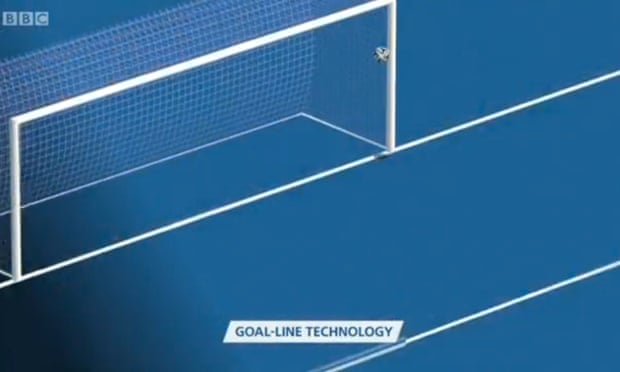
Italy, what's wrong with you? If wrong is really wrong, of course. There is more than an impression about the huge problem Italy has in distinguish between what is right and what is wrong. It is basically a problem of principles and ethics when the definition of good and evil are put in question, as it is for Italians. There is a small apparently not meaningful episode which showed the Italian approach. It happened at the beginning of the year, during a football match. For the first time the Italian Serie A tested the goal-line technology, a new generation tool able to understand whether the ball crosses the goal-line. With ASRoma playing in Verona and leading 3-2 against Chievo, the referee man granted a free-kick to Chievo. The striker shot and scored a goal, but it was possible to convalidate it only after have watched the goal-line technology elaboration of the free-kick. In fact the referee man didn't give any goal, then he had to correct himself saying the new score of the match was fixed on 3-3. All the media started reporting that ASRoma was «punished» or «condemned» by technology. Nothing more wrong. No one has been punished, and technology was not responsible fot nothing but making what it has been created for. Technology made clear what was not, avoiding a wrong decision and, as a direct consequence, an eventual unfair defeat. So, what happened is basically fair. People should underline that technology made justice instead of saying it condemned somebody. This clearly shows how in Italy the idea of right and wrong has another nature, well different from that one shared outside the country.
by Emanuele Bonini
Italy, what's wrong with you? If wrong is really wrong, of course. There is more than an impression about the huge problem Italy has in distinguish between what is right and what is wrong. It is basically a problem of principles and ethics when the definition of good and evil are put in question, as it is for Italians. There is a small apparently not meaningful episode which showed the Italian approach. It happened at the beginning of the year, during a football match. For the first time the Italian Serie A tested the goal-line technology, a new generation tool able to understand whether the ball crosses the goal-line. With ASRoma playing in Verona and leading 3-2 against Chievo, the referee man granted a free-kick to Chievo. The striker shot and scored a goal, but it was possible to convalidate it only after have watched the goal-line technology elaboration of the free-kick. In fact the referee man didn't give any goal, then he had to correct himself saying the new score of the match was fixed on 3-3. All the media started reporting that ASRoma was «punished» or «condemned» by technology. Nothing more wrong. No one has been punished, and technology was not responsible fot nothing but making what it has been created for. Technology made clear what was not, avoiding a wrong decision and, as a direct consequence, an eventual unfair defeat. So, what happened is basically fair. People should underline that technology made justice instead of saying it condemned somebody. This clearly shows how in Italy the idea of right and wrong has another nature, well different from that one shared outside the country.
Subscribe to:
Posts (Atom)