Thursday, 30 October 2014

Toward a cyber world war

An ever growing number of states around the world are preparing for conflict in the cyber domain, and, in this context, have been developing cyber warfare

by Emanuele Bonini

While international law is still struggling with defining norms on state actions in cyberspace, the latter is now increasingly viewed as a fifth domain of warfare, revealed a study conducted by the European Parliament. Although, for the time being, no cyber attack is known to have provoked death or physical damage to human beings, an ever growing number of states around the world are preparing for conflict in the cyber domain, and, in this context, have been developing national doctrines, cyber-defence strategies and defensive and offensive capabilities for cyber warfare. In today's highly interconnected world, cyberspace and the wide array of risks and threats associated with it have become more and more preoccupying for states. The increasing range and sophistication of threats in the cyber realm – from malware to distributed denial of service (DDoS) attacks to advanced persistent threats (APT) – have prompted efforts to protect against the risks posed to businesses and governments alike: economic and military espionage, theft of intellectual property, interference with critical infrastructure, and destruction of data. In this context, states are developing cyber-defence and cyber-offence capabilities to prepare for the advent of "cyber war".

United States: the country has militarised the response to cyber-attacks through its Cyber Command (USCYBERCOM), launched in 2010 and bringing together the cyber components of the US Navy, the US Marine Corps, the army and air force into a unified command. USCYBERCOM is one of the largest cyber-defence organisations in the world. The Pentagon has also increased spending on cyber operations ($26 billion over the next five years) and pledged to build a 6.000 strong cyber force by 2016. Moreover, a 2013 presidential directive instructs the US to aid allies who come under foreign cyber attack;

Wednesday, 29 October 2014

Behind the Belgian crisis


(Reportage realized by Arte. English transcription by Emiliano Biaggio) - What about the deepest causes of the crisis Belgium is experiencing? Is it history? Is it the identity? Is it the rivalry between Walloons and Flemings? Let's have a look to the map to try to understand a little bit more about Belgium. The kingdom has a surface of 30.500 square kilometres, and 10,5 million people live there. Belgium capital city, Brussels, symbolizes the integration of Europe but at the same time is the capital city of a country which risks to split up. How is it possible? There is no doubt the first explanation is historic reasons. Belgium didn't exist as an independent country until the XIX century: the territory we know nowadays has been under the influence of other European powers (Spain, Austria, France, Germany). At the end of XVIII century (1795) Belgium as we know today was part of France, and was divided in nine districts. Then it became part of Napoleon's empire. In 1815 Prussia, Austria and the United Kingdom decided to re-design the chart of Europe, and the idea was of creating a buffer state in order to can address any French expansion. This buffer state, the kingdom of the Netherlands, put together two different peoples: Protestants in the north, Catholics in the south. This buffer state lasted only fifteen year: in fact Catholics from the two linguistic communities went together and declared the independence in 1830. But in this new country Flemish community felt ruled by Walloons for two reasons: language and economy. French became the official language of the kingdom in reaction of former allied of the Netherlands and because French was the language spoken by the economic bourgeoisie. Only in 1898 Dutch was declared official language of Belgium. Secondly, Wallonia at the time was one of the most important industrial region of Europe because the high concentration of coal mines, and iron and steel plants. Flanders were, on the contrary, nothing but an agricultural district. Only in the 60's the situation started to change: Wallonia economic tissue was on crisis while the Flanders started to experience industrialization thanks to automotive sector and chemical industry development. The city of Antwerpen, with the third most important commercial harbour in Europe, helped the Flanders to gain economic power. As a result, Flanders today account for 80% of Belgian export.

Tuesday, 28 October 2014

Quotes

«We are discussing about one-two billions difference, we can add them even this morning».
Matteo Renzi, prime minister of Italy, talking about adjustments required for the stability law (Brussels, 23 October 2014)

Chronicle of a (political) death foretold

Once again Matteo Renzi demonstrated to be not able to deal with Realpolitik. Weaker at home and absent abroad, this is the political novel of a missing leader

Opinion

Something is wrong with Matteo Renzi. Italian prime minister still doesn't know how to deal with European affairs, and still has not people able to suggest him what to do. If he has, his staff always suggest the most stupid thing to do. It's neither not polite nor not intelligent making public a letter strictly confidential, as Renzi did with EU Commission letter sent to Italy asking information about the stability law. Screaming and threatening to publish the expenditure plan of an Institution is something never seen before from a politician, of course not from an head of government. In only one day Renzi was able to boost the general common lack of confidence in Italy and its leaders. First of all because of the diffusion of confidential documents: now everybody knows Italy can't keep anything secret. Secondly, Renzi in threatening the EU Commission of publishing all the financial data forgot the whole budget is already available on the web (click here, if you want to check it out), so he basically promised to do nothing but something already done by others. Who are these “others”? The European Commission, obliged by law to make public all the information on expenditure.

Monday, 27 October 2014

AS Gryffindor, red and yellow magic

The Gryffindor Express

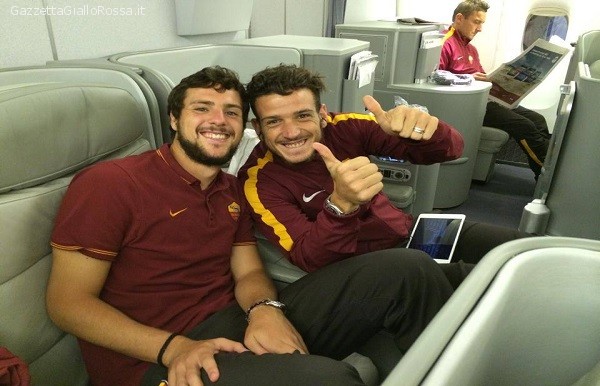
We have already written everything about Gryffindor, but we still don't know how the team move from Hogwarts to the other places when they play away. If you are thinking to portkeys, floo powder, flying carpets never mind. Of course for magicians all these are very common tools among magicians and witches, but it's not the case. In fact Gryffindor players travel onto the Gryffindor Express, a special train realized only for this quidditch team. In perfect yellow and red style (see the pictures above), as you can see in the picture, the Gryffindor Express is used for the away matches. As well as the most popular Hogwarts Express, the Gryffindor Express magical train carries athletes non-stop. In case of matches to be played in London, the Gryffindor Express stops at Platform 9¾ at King's Cross station.
Yep, the same Platform served by the Hogwarts Express, but there are not so many the magical train lines! Just to have a look inside, here we can see how comfortable is the Gryffindor Express. Here in the foreground (picture on the left) we have some Gryffindor players and, on the background, we can see a chaser reading a copy of the Daily Prophet.


Friday, 17 October 2014

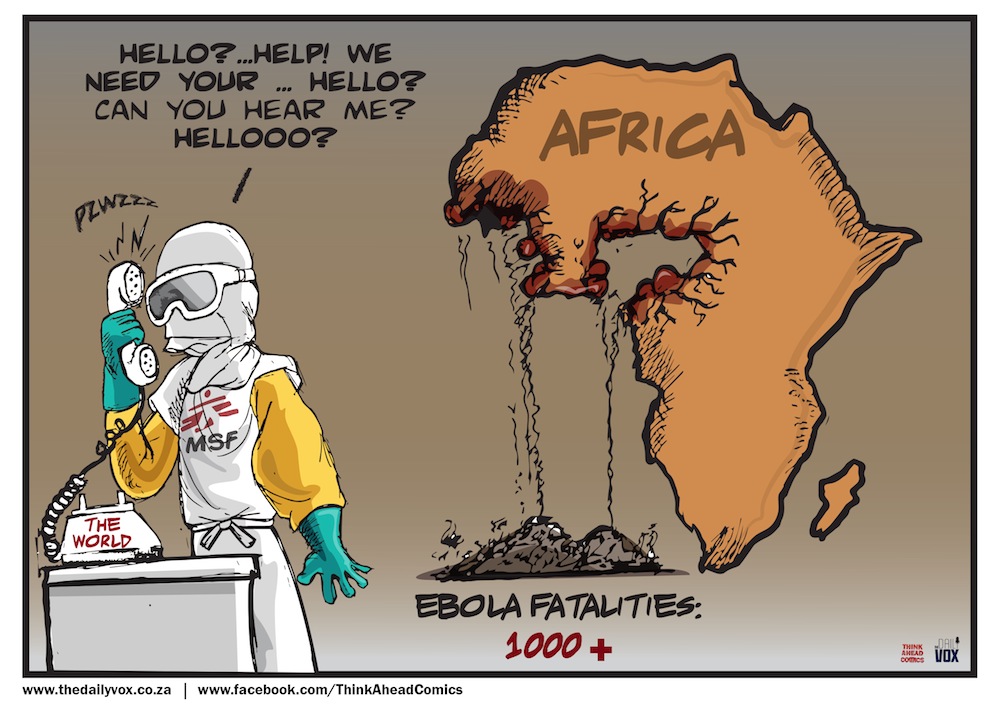
FACT SHEET/ Ebola geographic distribution

The useless European agenda for Ebola

EU ministers are discussing several measures to face the threats posed by the virus, but nobody thinks to develop a cure

by Emanuele Bonini (my article for EuNews)

Compare it to the classical dust hidden under the carpet, define it as the typical “every man for himself”, understand it as a “do it by yourself” message, or call it simply Western hypcrosy. In any case the answer the European Union has in mind to address the Ebola crisis can't find comparison different fromt those just proposed. Visa check, exchange of information on air passengers travelling to and from one of the African countries with Ebola virus, a better evacuation strategy, isolation policy for people considered at risk, communication campagn: these are the measures EU Health ministers are working for.
«I do believe we can win Ebola in Western Africa», stated Italian Health minister for Health, Beatrice Lorenzin, showing courage not only for a knowledge of the English language which demonstrates how poor is the Italian education system.

Wednesday, 15 October 2014

«After 15 years no progress in Italian economy»

CEPS chief Daniel Gros critic over Italy. Time is over, now let public debt be reduced

Daniel Gros
by Emanuele Bonini

«It's almost fifteen years that Italy calls for a temporary relaxation of European deficit and debt reduction targets, but it seems this has not produced any results. And Matteo Renzi's 80 Euros bonus produced a null impact as well». Daniel Gros didn't spend very fair words for Italy. Talking to us the director of the Centre for European Policy Studies (CEPS) warned time is over for the country, whit a a lack of credibility and confidence at international level. Europe and European partners are fed up. Promises are not acceptable any more, Gros basically said. For Renzi and company is time to invert trends and boost Italian economy. «I don't think that a country can sustain and maintain growth with deficit and public debt levels even higher than usual», said the CEPS chief. «For a country as Italy it would be dangerous, too».

Tuesday, 14 October 2014